Editor Daniel Garber Breaks Down the Intricate Edit Behind Primetime
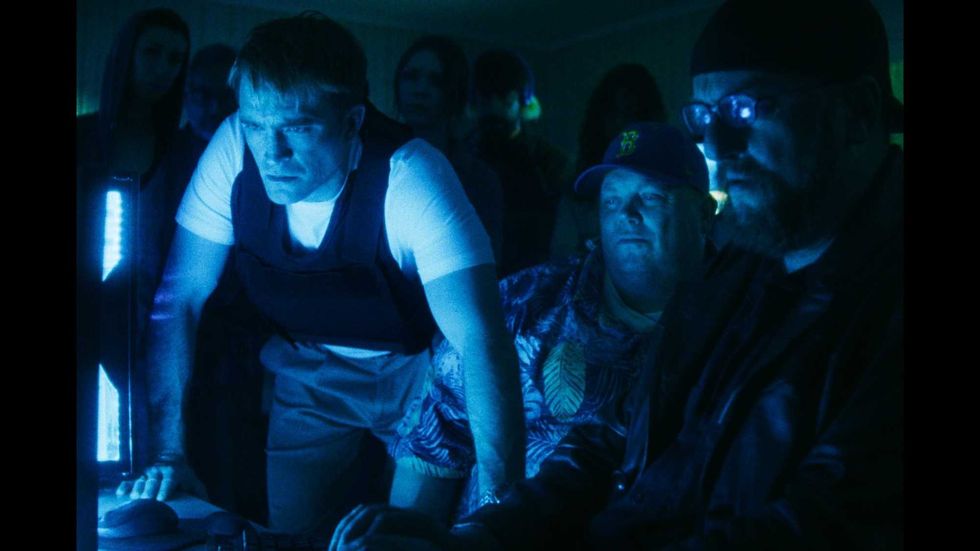
After years of talking about making a fiction film that explores the complexities of nonfiction storytelling, director Lance Oppenheim and his longtime collaborator Daniel Garber, ACE, jumped at the chance to make a nontraditional biopic that examines the dark sides of hidden-camera television and its surrounding cultural discourse. Oppenheim and Garber instantly connected with Ajon Singh’s powerf
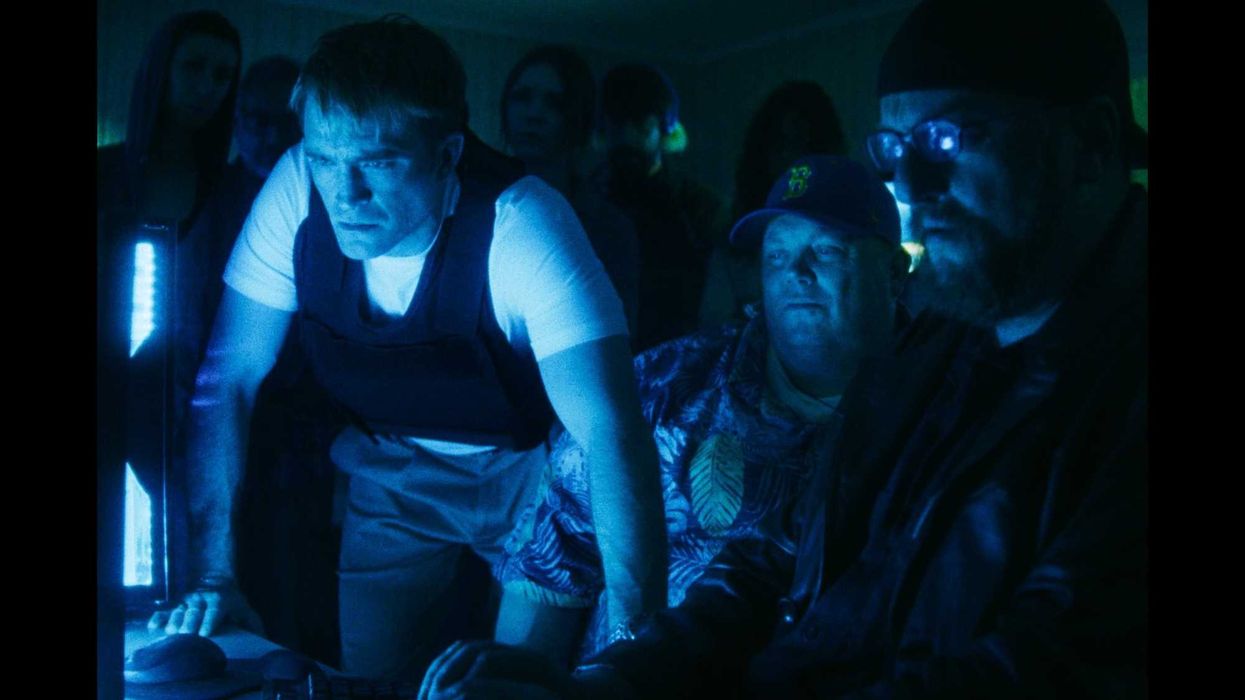
After years of talking about making a fiction film that explores the complexities of nonfiction storytelling, director Lance Oppenheim and his longtime collaborator Daniel Garber, ACE, jumped at the chance to make a nontraditional biopic that examines the dark sides of hidden-camera television and its surrounding cultural discourse.
Oppenheim and Garber instantly connected with Ajon Singh’s powerful screenplay, which gave them a clear vision for exploring this complex subject matter and a unique opportunity to apply their own documentary and unscripted experience to this narrative feature. Balancing 14 camera formats, unsynced vintage DV footage and a variety of audio files to create a TV show within the film, Garber chose to edit on Adobe Premiere. The multicam tools in Premiere were especially helpful in managing the mix of footage from modern cameras to retro broadcast systems, and the Essential Sound Panel was key to recreating visceral, vintage TV and phone audio.
Read on for more about Garber’s workflow and collaboration with Oppenheim to craft and communicate the high-stakes reality of the famed TV show.
Tell us about Primetime. How did you first become involved?
Daniel Garber: Lance Oppenheim and I have worked together for years. I met him when he was still an ambitious college senior on what would become our first documentary feature together, Some Kind of Heaven. Even then, his command of style and cinematic language impressed me, and our easy rapport from our first meeting set the course for what has become one of my most fruitful creative relationships.
Lance and I had talked for years about making a fiction film about the inherently thorny nature of nonfiction storytelling and the practice of turning real pain into mass entertainment. So when Ajon Singh’s script landed on Lance’s lap, it felt like the culmination of a longstanding obsession—and like we had found a kindred spirit in Ajon. My parents were very anti-TV, so I wasn’t an avid viewer of To Catch a Predator growing up–but the show penetrated even my media bubble. It became a cultural touchstone, a phenomenon that was inescapable for American teenagers who, like me, grew up on AIM and early YouTube. The chance to tackle such a complex topic with some of my most valued collaborators and some great new ones was a perfect assignment.
How did you set up your workspace during this post-production process?
DG: Lance and I have worked out of the same office space in Brooklyn for years, gradually improving and augmenting the physical setup. My wonderful assistant editor, Katyann Gonzalez, handled most of the project setup and built out organizational tools that proved invaluable throughout the post process.
We accessed Premiere Productions from a shared server in Lance’s office that housed all our offline media. We simultaneously kept an encrypted portable RAID up to date with the edit so that I could occasionally cut on the road. Lance and I went on a couple of retreats during the post process, and the portable edit drive gave us the ability to keep working on my laptop without all of the trappings of our edit bay back in the city. When we got back, we’d bring any new work back onto the server.
What conversations did you have with your director to align on the creative vision for the project? What did collaboration look like throughout production and post?
DG: In contrast to our documentary process, Lance’s and my conversations about Primetime began with an excellent script. Ajon’s screenplay immediately declares itself to be anything but a straightforward biopic, taking a journalistic account of Hansen’s career and refracting it back to us in a totally unexpected, heightened form.
In post, I’m not the kind of editor who prefers to be left alone; I thrive on interactions with the director. Lance and I egg each other on, achieving great new heights or, at other times, going down rabbit holes, and we often left it to Katyann to tell us honestly which direction we were headed. Friction is also a powerful tool in the editing room. When Lance and I have disagreed on an approach to a scene, we’ve never failed to come up with a third solution better than each of our initial ideas. At every stage, Lance tries to make discoveries, finding ways to further elevate the script and the performances. The sense of endless possibility and a desire for reinvention is what makes working with him so thrilling for an editor.
Tell us about a favorite scene or moment from this project, and why it stands out to you.
DG: One of my favorite sequences in the film is the introduction of Dan Plum (Skyler Gisondo) and his friend Troy (Eric Rahill). They’re struggling actors living in temporary housing in Burbank, and Dan books a gig as a decoy on To Catch a Predator. Eric, his friend and self-appointed acting coach, helps Dan develop his persona as the 13-year-old boy he’ll be playing on the show. This was one of the most exhilarating sequences to cut; for me, it unlocked the film’s tone and style, and it perfectly encapsulates the way that Lance and I work together.
They shot the same Dan-Troy dialogue in multiple locations and, in each of those, also captured a ton of unscripted dialogue from these two incredibly talented improvisers. The number of possible permutations with this footage was staggering, and it immediately became clear that a treasure trove of hilarious ad libs would wind up on the cutting-room floor. Shaping this sequence felt like a return to documentary filmmaking, trying to instill some order and shape to the discoveries on set, while honoring the excellent dialogue Ajon had written.
Billy Bob Thornton on Inside the Actor’s Studio was originally intended to be background audio, and the scene of Dan practicing his childlike voice and getting feedback from Troy was entirely unscripted—but I was inferring a connection between these two elements and decided to run with it. Dan, paying close attention to how Billy Bob produced the voice in Slingblade, and then trying his own exaggerated, pitched voice, seemed too good an opportunity to pass up: juxtaposing these elements helped create a sense of Dan’s ambition as a performer, the seriousness he brings even to the role of a child on a hidden-camera show. That kernel of an idea helped set me free to do a kind of associative editing throughout the sequence, leaping from one location to the next, mixing archival footage of Billy Bob with our original footage, in one dizzying sequence held together by Ari Balouzian’s bombastic and carnivalesque score. After an initial round of notes from Lance, this sequence sat virtually untouched for the remainder of the edit and became a kind of north star for the film’s editorial approach.
What Adobe tools did you use on this project and why did you choose them?
DG: We used very few tools in post, in part, because Adobe Premiere was such an all-in-one piece of software. Productions was at the heart of our workflow and enabled Katyann and me to collaborate seamlessly off of our shared server.
Premiere’s Speech-to-Text function was also essential for us. With Lance’s tendency to invite improvisation and line alts, the transcript became a major time-saver during the edit. I’m also fond of Premiere’s built-in audio tools: because so much of the film features audio playing through speakers, I found myself reaching frequently for the Essential Sound Panel to place audio on a TV or a phone.
Finally, I like to use Remix to quickly audition music cues and make a quick determination about whether it’s worth devoting more effort to making that music work in the scene.
What were some specific post-production challenges you faced when editing Primetime? How did you tackle them?
DG: Much of what was unique and challenging about the workflow had a lot to do with the volume of footage and the number of formats we were contending with. Primetime mixes and matches different cameras, incorporating the cinema camera, DV footage that represents the show within the movie, vintage broadcast cameras, and more. I think there were 14 camera bodies in use over the course of principal photography.
This was, first of all, a technical feat: Katyann was tasked with harmonizing this medley of different aspect ratios, recording media, frame rates, and resolutions. In the film’s climax alone, we used ten cameras, and at one point, eight cameras were recording simultaneously, without the ability to jam-sync on the vintage cameras. So Katyann spent a lot of time building multicams—and I spent a lot of time reviewing them. To handle the influx of DV tapes, Katyann also built a database to track information about each tape, like its content and transfer status.
Creatively, the mixture of formats was its own challenge, as it wasn’t predetermined how all of them would fit together when the edit began. The DV footage, for instance, was originally just intended to play back on screens on set; there was even a question about whether it should be ingested for use in the edit. I quickly saw the power of going full-screen into the cold, surveillance camera objectivity of the DV with the subjective and emotional cinema camera.
Our most stylistically extreme camera was a vintage Plumbicon tube camera, with its psychedelic effusions of color. Lance and David had fallen in love with the look, but it was so unusual that we realized that it could only be used intermittently for an accent. It flickers in and out of the film, showing up as Chris’s sense of reality begins to fray. A long process of trial and error eventually brought us to an unspoken logic of when each type of camera would play, and we only knew we had arrived at the right balance when our test viewers stopped noticing the transitions between formats.
Who is your creative inspiration?
DG: One of my biggest inspirations is Lance’s and my former film teacher, documentary filmmaker Robb Moss. He amazes me with his ability to close-read films in progress with such keen awareness of his own emotional responses to what’s on screen as well as attunement to what the film itself seems to be asking for. I aspire to approach every film viewing experience with the level of curiosity and sensitivity that he has.