Film Quote of the Day: The Final 'Halloween' Exchange That Turned Michael Myers into Myth
In 1978, John Carpenter's Halloween changed horror movies forever with its story of suburban terror. Laurie Strode's Halloween night becomes a fight for survival when Michael Myers escapes captivity and returns to his home, then fixates his killer rage on Laurie and her friends. What better time to revisit this slasher classic than the week before All Hallow's Eve itself? Today we want to look at
In 1978, John Carpenter's Halloween changed horror movies forever with its story of suburban terror. Laurie Strode's Halloween night becomes a fight for survival when Michael Myers escapes captivity and returns to his home, then fixates his killer rage on Laurie and her friends.
What better time to revisit this slasher classic than the week before All Hallow's Eve itself? Today we want to look at the iconic lines that end the movie and set off a popular franchise.
Watch the moment below.
- YouTube www.youtube.com
The Scene
Michael Myers escapes a mental institution and steals a car to drive back to Haddonfield. In pursuit is his psychiatrist, Dr. Loomis (Donald Pleasence), the only person aware of Michael's dangerous nature.
By the end, Laurie (Jamie Lee Curtis) is the film's final girl, shaking on the floor after fighting off Michael.
Loomis puts several bullets into Michael. The gunshots send Michael plunging off a second-story balcony onto the yard below. In the aftermath, Laurie cries. In shock, she says the thing a child would say.
"It was the boogeyman."
Dr. Loomis looks at her. "As a matter of fact, it was."
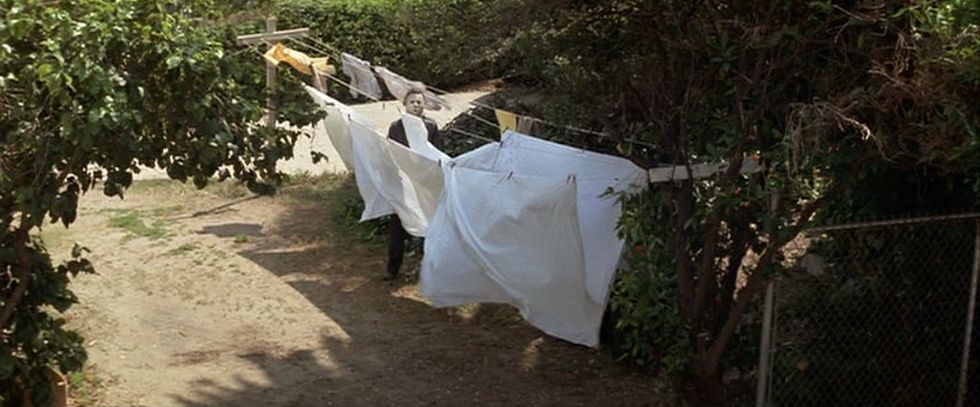
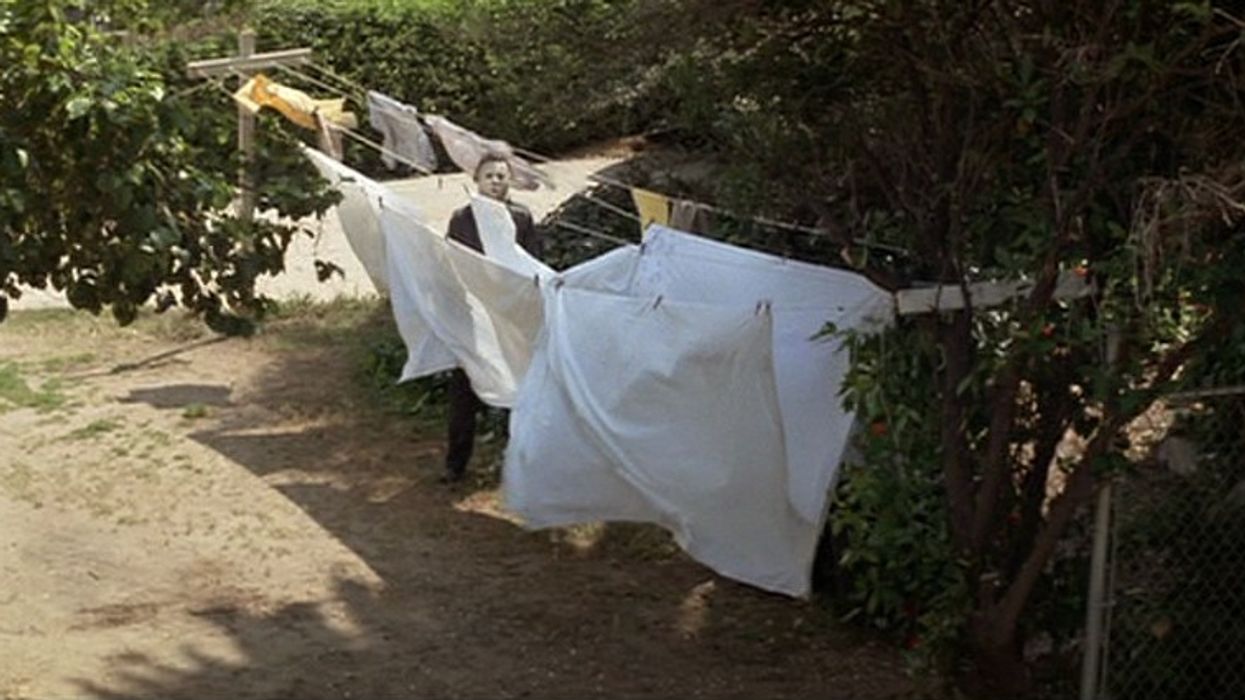
Loomis walks to the balcony, and the lawn below is empty. The film concludes with several shots of various locations from the disastrous night, empty—including Michael's childhood home.
Two Writers Meet in One Exchange
Carpenter directed the film, and he also co-wrote the screenplay with Debra Hill.
Most co-written scripts blend their voices until you can't tell who wrote what. Halloween kept its two voices separate on purpose, and the final exchange is the first time they speak directly to each other about the same monster. The ending is interesting because two writers built two halves of a story and then let them meet.
The AFI Catalog reports that Carpenter and Hill described their collaboration as an even split, with Hill writing the babysitters and Carpenter writing Loomis and Michael.
This means that Hill created one of the most famous final girls of all time in Laurie.
"One review said the most notable thing about the movie," Hill told Entertainment Weekly in 1997, "was that it was produced by a woman, because it shows she has the tacky taste of a male chauvinist pig. I just laughed" (via The Los Angeles Times).
The script came together quickly, with Hill claiming it only took three weeks to write. A fast, split draft makes the merge points more deliberate, and the ending is the biggest of them.
In the movie, the girls talk like teenagers. Their walk home is all about boys and babysitting plans, with the town's ordinary rhythms around them. Laurie is the responsible one, the skeptic who tells Tommy there's no such thing as the boogeyman.
Hill grew up in Haddonfield, New Jersey, and the fictional film town is named after it.
Loomis is the opposite register. He gives speeches. He's the only adult who talks about Michael in moral absolutes, and the film spends most of its runtime treating him like a man nobody will listen to.
"I met him 15 years ago; I was told there was nothing left. No reason, no conscience, no understanding, and even the most rudimentary sense of life or death, of good or evil, right or wrong. I met this six-year-old child with this blank, pale, emotionless face and the blackest eyes... the devil's eyes. I spent eight years trying to reach him, and then another seven trying to keep him locked up, because I realized that what was living behind that boy's eyes was purely and simply evil."
- YouTube www.youtube.com
In the end, the skeptic from Hill's storyline regresses, and in her shock uses the word she tried to dismiss earlier. The serious doctor from Carpenter's storyline answers simply.
Each character crosses into the other's territory. Laurie stops being rational, and Loomis stops being grandiose. The two stories have finally become one.
If you're co-writing, splitting the work by character or storyline can give each thread a distinct voice. Then you'll need to plan the scene where those threads have to share dialogue, because that's where the audience will hopefully see it all come together thematically and in character resolution.
Setting Up the Boogeyman
Laurie doesn't believe any of this. She's an adult. She's responsible. She's grounded. The boogeyman isn't real.
"A man wouldn't do that," Sheriff Brackett says at one of Michael's crime scenes.
Loomis responds, "This isn't a man."
Carpenter told Rotten Tomatoes:
“The script was a departure from a lot of horror films that I had seen as a kid and as a film school student. The antagonist, Michael Myers, was neither human, nor supernatural, but a combination. So I had to ride a line there with him. He was everywhere in the darkness. He was just a killing machine and at the time we hadn’t seen that too much. That’s what I was trying to do–and [I was] trying to scare the audience. That was my job.”
- YouTube youtu.be
Ending on a Question
The final exchange closes this chapter but leaves the storyline open, which is common in horror films not only for the purpose of ending on something scary, but also to leave the possibility for a follow-up.
Carpenter had no idea the film would perform, and many critics hated the ending. He told Rotten Tomatoes:
"A lot of people criticized my ending. They thought it sucked. They thought it was bad. And then we finished the movie, and put the music on it, and put it out there, and then the reviews came in and they were bad. ‘John Carpenter does not have a talent with actors’ it said in some of the reviews. Oh lord. So, once again, I got bad reviews on something. But then the audience started to build. Halloween was a word-of-mouth movie. That’s why it worked.”
It's now one of the most celebrated classic horror films ever. What do you think of the last exchange?