Generative AI in Filmmaking Reaches Its Crucial Post-Production Test
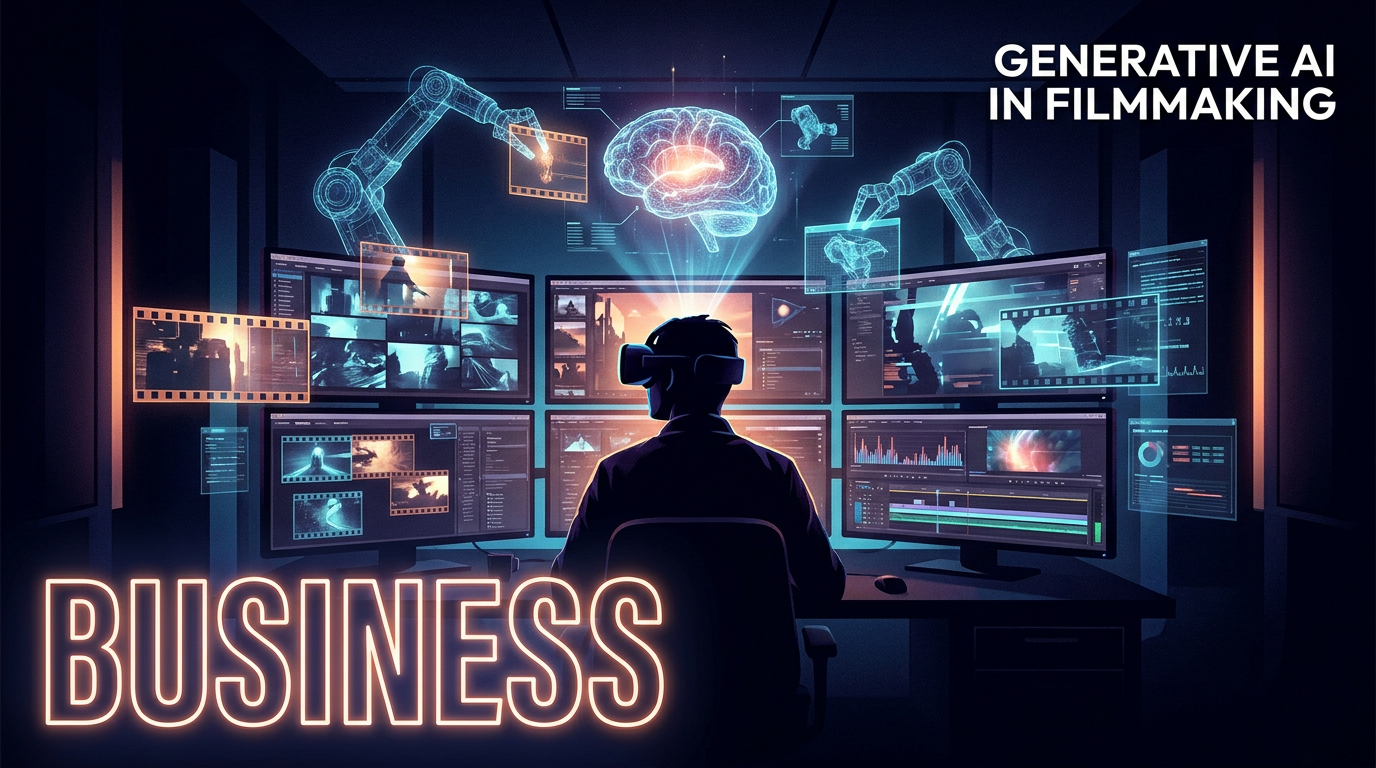
Two years after union battles drew clear guardrails around synthetic media, studios are integrating generative video tools strictly into pre-visualization and background plate rendering. Here is how creative workflows are actually shifting on set.
In brief: Generative video models have transitioned from speculative tech demos to pragmatic production utilities across studio backlots. While labor agreements prevent outright synthetic actor replacements, machine learning is dramatically reshaping visual effects pipelines, pre-visualization, and budget management.
The breathless panic that characterized early debates over generative artificial intelligence in Hollywood has given way to an era of cautious, contractually bound integration. In late 2026, the question is no longer whether machine learning will replace screenwriters or lead actors, thanks largely to enforceable collective bargaining agreements that established explicit guardrails around likeness and authorial credit. Instead, the real technical revolution is unfolding behind the scenes within visual effects suites, virtual production stages, and pre-visualization facilities.
Industrial Utility Over Wholesale Replacement
Major entertainment companies are now actively embedding proprietary generative models directly into their existing digital pipelines. Rather than relying on public web-scraped engines that carry intellectual property liabilities, studios are licensing tools trained exclusively on certified catalog assets and clear public-domain libraries. Directors and visual effects supervisors are deploying these platforms to create dynamic storyboards, generate rapid digital set extensions, and prototype complex lighting environments in hours rather than weeks. This shift has radically compressed the costly pre-production design phase.
The impact on post-production is equally pronounced, particularly in technical tasks that historically consumed thousands of visual effects artist hours. Machine-assisted rotoscoping, clean-up work, crowd duplication, and background plate generation have become largely automated. This evolution has generated friction between cost-cutting studio executives and visual effects facilities operating on paper-thin margins. While vendors can turn around revisions at unprecedented speeds, fixed-bid contracts have not necessarily increased in value, placing severe pressure on independent post-production houses to adapt or consolidate.
The Battle for Ethical Provenance
Intellectual property governance remains the definitive battleground for generative video deployment. Entertainment attorneys are policing digital assets with extreme scrutiny, requiring exhaustive audit trails for any algorithmic output that touches a commercial master. The fear of downstream copyright infringement continues to prevent major streamers from deploying synthetic video directly into final camera-ready frames for premium features. Consequently, generative tools are functioning primarily as hyper-sophisticated brush extensions rather than autonomous creative engines.
Independent filmmakers, however, are leveraging these same enterprise tools to bypass traditional barrier-to-entry costs entirely. Micro-budget productions that previously could never afford world-building sci-fi environments or historical period recreations are executing high-fidelity aesthetics on shoestring budgets. This democratization has sparked a vibrant parallel indie ecosystem, forcing prestigious film festivals to establish distinct categorization policies regarding the permissible percentage of synthetic visual elements within submitted projects.
What the Creative Balance Sheet Dictates
The long-term creative consequences of this technological pipeline are still crystallizing across the entertainment industry. The risk of visual homogenization remains acute, as generative models inherently reproduce stylistic averages and familiar cinematic tropes unless heavily countermanded by human artistry. Directors who champion idiosyncratic, tactile filmmaking are intentionally rejecting synthetic shortcuts, turning practical in-camera methodology into a defining marketing signature.
As production pipelines standardize these generative systems, the balance of power will ultimately hinge on human editorial judgment. The tools can generate infinite variations of a dystopian skyline or alien landscape, but the artistic discipline to select the singular image that serves narrative thematic truth cannot be automated. The future of film production belongs neither to the alarmists nor the technocrats, but to the filmmakers who harness computational tools without sacrificing narrative soul.