Generative Video in Hollywood Shifts From Novelty Gimmick to Practical Post-Production
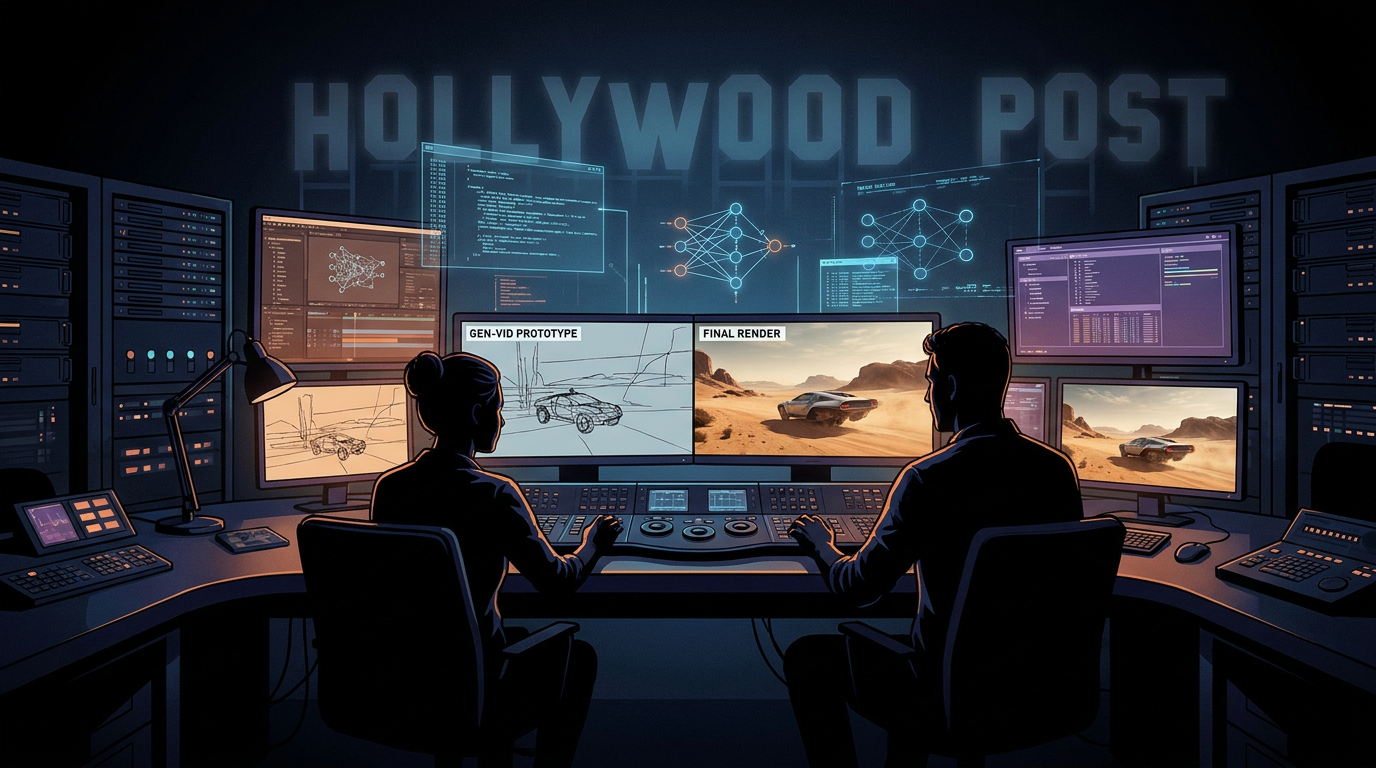
Generative video tools are moving out of experimental labs and into actual Hollywood post-production pipelines. Major studios are adopting background-plate synthesis and automated visual effects clean-up while balancing union oversight.
In brief: Generative video software is finding a permanent, structured foothold in studio visual effects and pre-visualization workflows. Instead of replacing creative talent outright, these algorithmic platforms are being deployed to eliminate labor-intensive rotoscoping, generate rapid background plates, and compress post-production timelines under clear contract protections.
The debate surrounding artificial intelligence in entertainment has finally shifted from speculative hand-wringing to the pragmatic realities of post-production infrastructure. Across major visual effects houses and editing bays, generative video tools are quietly transitioning from divisive tech demonstrations to specialized software plugins designed to resolve persistent workflow bottlenecks. Rather than using automation to build entire sequences from scratch, visual effects supervisors are integrating neural tools to manage the tedious digital tasks that traditionally delayed project completion for months.
Practical Utility Over Wholesale Generation
Where algorithmic video tools excel today is in the domain of automated utility work: rapid rotoscoping, clean-plate generation, and background crowd synthesis. Tasks that once required junior compositors to meticulously trace frames by hand can now be drafted in hours, allowing artists to spend their energy on complex lighting integration and creative color grading. Visual effects directors emphasize that these engines serve as sophisticated assistants rather than creative decision-makers. The real value lies in accelerating the feedback loop between initial director feedback and final composited shots, helping creative teams iterate without breaking production schedules.
Furthermore, pre-visualization has undergone an extensive internal revolution due to rapid scene-prototyping engines. Directors can now translate hand-drawn storyboards into atmospheric lighting models and rough camera movements within a single afternoon of conceptual meetings. This capability allows heads of department to test framing, lens choices, and set-extension boundaries long before physical cameras roll on soundstages. By resolving technical staging questions during pre-production, productions reduce expensive reshoots and set delays, saving millions in physical production costs across complex cinematic sequences.
Union Safeguards and Legal Guardrails
Crucially, this operational rollout is happening within boundaries defined by landmark guild agreements and strict intellectual property protocols. Major studios are strictly prohibiting commercial tools trained on scraped, unverified public data to avoid catastrophic copyright infringement liabilities. Instead, visual effects facilities are partnering with tech developers to train bespoke, closed-loop neural models exclusively using studio-owned historical archives and licensed stock libraries. This closed-sandbox approach gives producers legal certainty while satisfying union contractual stipulations regarding human-driven creative authorship and consent.
Nonetheless, tensions remain high across technical craft communities as post-production employment patterns gradually shift. While top-tier visual effects supervisors and lead digital artists find their capabilities augmented, junior entry-level roles face narrowing opportunities as routine clean-up tasks become automated. Industry guilds are monitoring these pipeline transformations closely to ensure that apprentice-level practitioners still have access to viable career pathways. The central challenge facing visual effects guilds is not outlawing new digital instruments, but managing their incorporation so that creative craftsmanship remains protected and fairly compensated.
The Long-Term Trajectory of Cinematic AI
As post-production pipelines normalize algorithmic tools into daily operations, the broader film industry will judge these systems purely on visual fidelity and storytelling efficiency. Audiences have made it clear that novelty technology cannot substitute for emotional depth, coherent pacing, and genuine human performance on screen. If generative video merely allows studios to produce mediocre content faster, it will accelerate viewer fatigue rather than drive engagement. The future belongs to those disciplined filmmakers who view software strictly as an instrument of craft, harnessing computational efficiency to serve compelling, human-centered narratives.