How Editor Sofi Marshall Wove Together Black Bear’s Bawdy and Heartwarming Fable 'Wicker'
Alex Huston Fischer and Eleanor Wilson’s Wicker follows an ostracized Fisherwoman (Olivia Colman) who commissions and falls in love with a Wicker Husband (Alexander Skarsgård), drawing together practical effects and technical filmmaking. After learning its otherworldly, fantastical plot, Editor Sofi Marshall jumped at the chance to join the project and reunite with past creative collaborators, dir

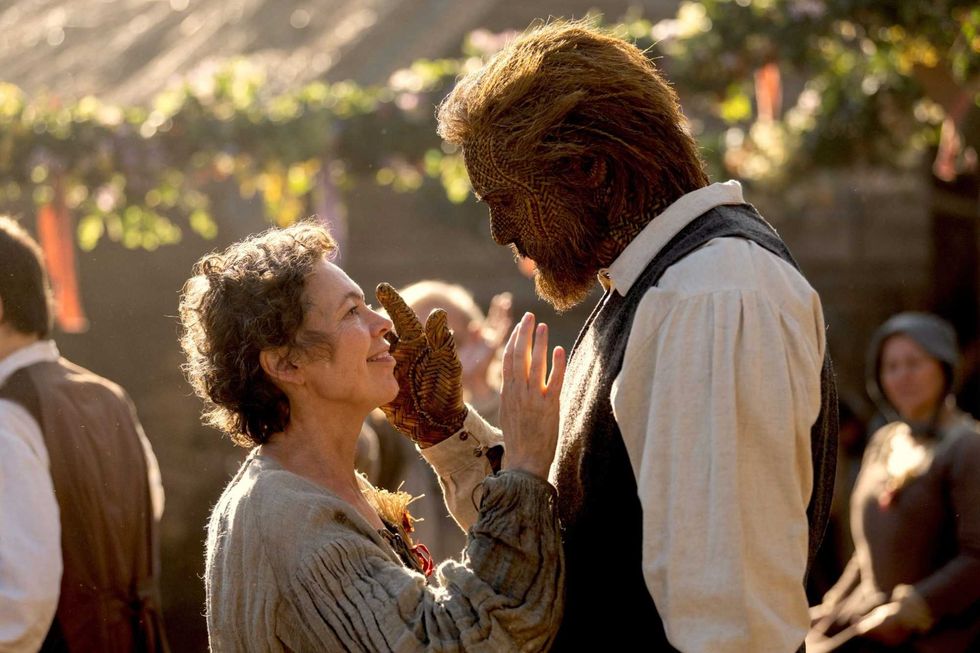
Alex Huston Fischer and Eleanor Wilson’s Wicker follows an ostracized Fisherwoman (Olivia Colman) who commissions and falls in love with a Wicker Husband (Alexander Skarsgård), drawing together practical effects and technical filmmaking. After learning its otherworldly, fantastical plot, Editor Sofi Marshall jumped at the chance to join the project and reunite with past creative collaborators, directors Huston Fischer and Wilson, to bring this project—and the Wicker Husband—to life.
Marshall built on Colman and Skarsgård’s authentic, powerful performances to bring the funny, heartwarming, and surprisingly vulnerable story to life. The post process was extremely collaborative. Often, she and the directors would each edit their own version of a scene, then come together to pick their favorite parts from each cut and shape the final version. Working across four time zones and three continents, the post team relied on Productions in Premiere to sync across the world and assemble the final edit.
Go inside the edit with Sofi Marshall to see how Wicker took shape.
How were you introduced to Wicker, and what drew you to edit it?
Sofi Marshall: Wicker is a love story at the perfect intersection of hilarious, bizarre, and charming—I knew I wanted to edit it just a few pages into the script! Of course, having worked with the directors, Alex [Huston Fischer] and Eleanor [Wilson], on their previous film Save Yourselves!, I knew that it would be a really fun and creatively fulfilling edit.
How did you set up the workflow for this film? What did you do differently?
SM: From the beginning, this project was unique. The entire edit was remote—the shoot was in Budapest, I was in New York City, the assistant editor and VFX team were in Australia, and the directors eventually returned home to Los Angeles. We set up the project as a Production that was hosted on LucidLink, which allowed us to keep everyone in sync across locations and allowed my assistant and me to work together seamlessly.
In the Production itself, I had several projects for my sequences, another for my scene bins, and separate projects for sound effects, VFX, and music.
How did you collaborate with Directors Eleanor and Alex throughout the filmmaking process to achieve Wicker’s creative style?
SM: Early conversations focused on crafting the unique tone of the film, which we described as a bawdy, heartwarming fable.
The entire post process was extremely collaborative. We spent the majority of our days editing together using my own real-time collaboration workflow, which allows me to stream my Premiere edit using NDI Tools. Alex and Eleanor are both skilled editors themselves, so all three of us (as well as our amazing assistant, Renne Diprose) would often work in the Production simultaneously.
If we were stuck on a scene, Alex, Eleanor, and I would each take our own quick passes at it, then we’d screen all three cuts and stitch together the best parts from each. We used the same process on their previous film, and I honestly love working this way!
Tell us about a favorite scene or moment, and why it stands out to you.
SM: In the last third of the film, there’s a quiet scene between the Fisherwoman and the Wicker Husband that beautifully showcases the growing vulnerability and love between them. The shots we wanted to be on and when we wanted to cut came together pretty quickly to shape the scene.
Then, over the course of the edit, we spent a ton of time trying out different performances from Colman and Skarsgård to make sure the scene was really singing emotionally. That’s one huge benefit to working with such skilled actors; every take is fantastic in its own way.
What editing tools did you use on this project and why did you choose them?
SM: We used a few different tools! Of course, we used Productions in Premiere to help us collaborate remotely. I also used the audio tool Remix a ton when adding in a temp score to the edit. It saved me so much time being able to quickly change the length of a music track without doing any manual editing.
I really love Premiere’s trim tools and think they’re a lot more robust than people realize. Trim mode allows me to edit exclusively with the keyboard, which speeds up my work exponentially. I also found Text-Based Editing to be helpful, especially when I needed to stitch together a Frankenstein sentence and had to search for a specific word or sound.
Finally, we used Frame.io for reviewing dailies during production and for notes on our work-in-progress cuts.
What were some specific post-production challenges on Wicker, and how did you tackle them?
SM: The biggest hurdle in this project was dealing with the many time zones throughout the edit. It was a brand-new challenge for me to have no working hours that crossed over with my AE. Hosting our Production and all of the media in the cloud was a huge help. I also made sure to outline tasks for my AE at the end of my workday, which was the beginning of her day. When necessary, we’d shift working hours slightly to allow us to meet remotely for an hour or two. It required a lot of math, but we managed to make it work!
Who is your creative inspiration and what advice do you have for aspiring filmmakers?
SM: I get most of my creative inspiration from books. I love to read novels in particular. There’s something about the opportunity to craft images in your mind that really speaks to me as an editor.
My best advice is to craft a picture in your mind of what you want your individual career to look like and then go after it. Find people who are just a few steps ahead of you and ask about what they did and how they did it. And don’t forget to buy them a coffee or two for their time!