How 'Werwulf' Fakes a Silent-Era Look in Color
Come with me on a journey of many horror references. In 1922, a Swedish-Danish silent film came out called Häxan . It was almost educational in nature, like a very early version of infotainment, and its subject was witches and witchcraft. It also happens to look terrifying. The same year, Nosferatu: A Symphony of Horror came out, and its imagery was similarly beautiful and disturbing, with its bru
Come with me on a journey of many horror references. In 1922, a Swedish-Danish silent film came out called Häxan. It was almost educational in nature, like a very early version of infotainment, and its subject was witches and witchcraft. It also happens to look terrifying.
The same year, Nosferatu: A Symphony of Horror came out, and its imagery was similarly beautiful and disturbing, with its brutalist and Gothic contrast.
Modern director Robert Eggers has already dabbled in the world of the undead with his take on Nosferatu. He's about to reenter that world with Werwulf, an upcoming gothic folk horror film based on the lycanthrope legend.
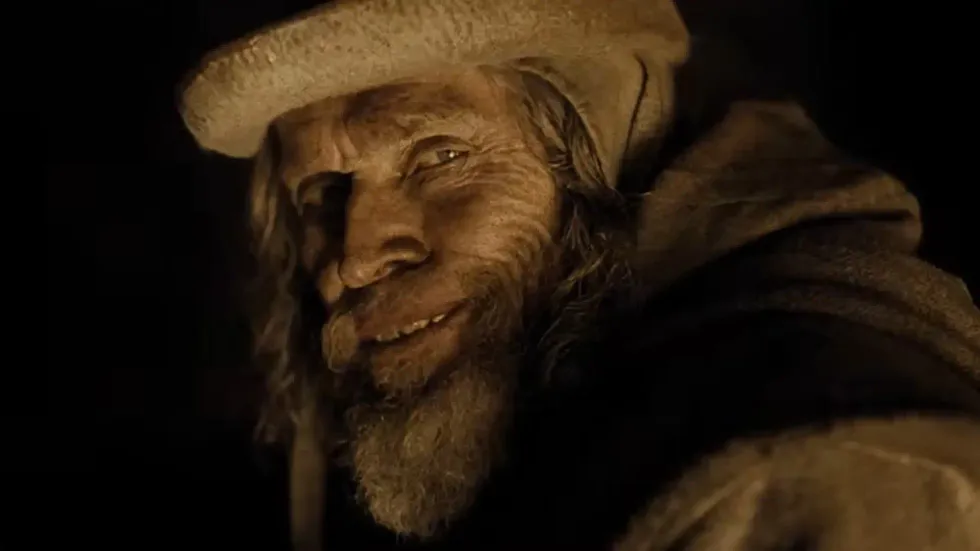
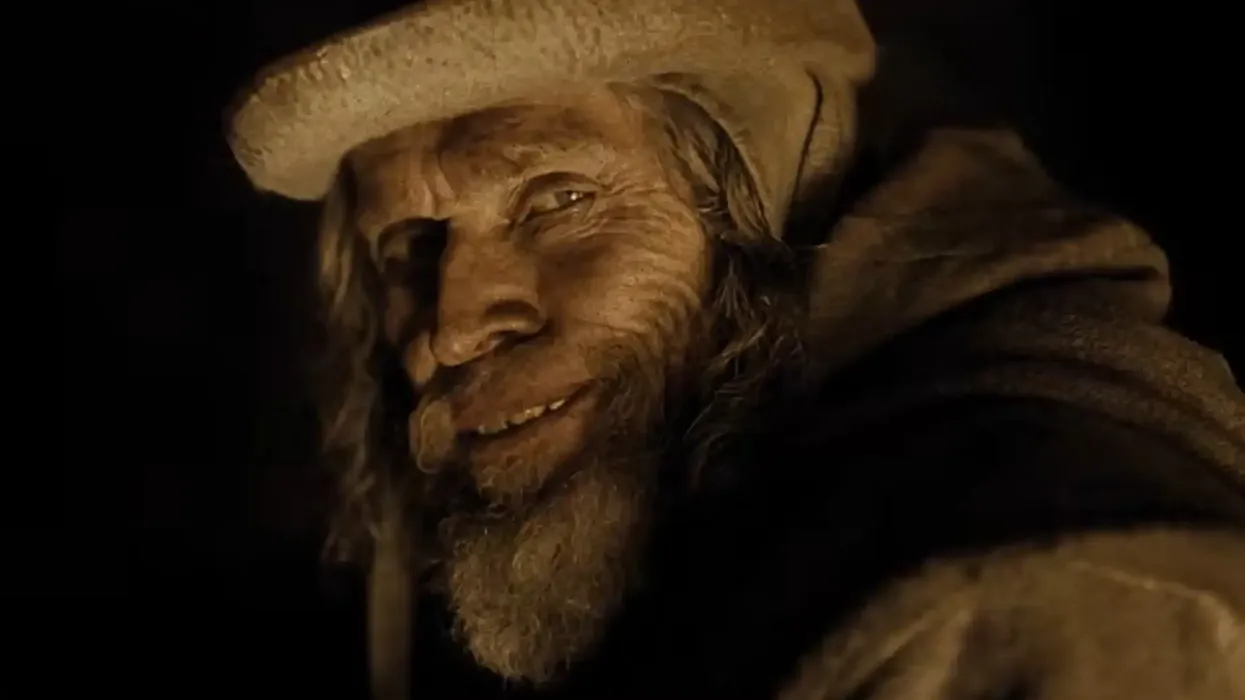
It appears he's pushed his visual language even further into its silent film roots, with monochromatic frames that aren't fully black and white but sometimes a wash of yellow, blue, green, or gray.
Eggers and his longtime cinematographer, Jarin Blaschke, have spent five features replicating early cinema textures. Eggers told Esquire that they shot on film.
"The look of the film, while it has similarities with the other films, is also unique. We shot on 35mm film, and we used an orthochromatic treatment in post to make the skin tones more wrecked [with complexions that appear sickly or discolored]. Additionally, we’ve found a way to incorporate the grain structure of black-and-white film onto color film. So it has a very unique look."
But what is that look, and how did he achieve it? Here's what orthochromatic film is, how Eggers and Blaschke faked it before, and what's new on Werwulf.
Aidan Paul took a stab at breaking it down, which is our inspiration today. Check out his video.
- YouTube www.youtube.com
What Orthochromatic Film Is
Orthochromatic film stock is a black-and-white stock that can't see red (only blue and green), so when photographed with it, unpainted faces read darker than they were, and any ruddiness made skin look dirty on screen (via Cosmetics and Skin).
That's why silent-era actors wore blue-toned greasepaint. Kodak made a more stable panchromatic stock commercially from 1923, cut its price to match ortho in 1926, and Hollywood switched quickly after that.
"There'll be exaggerated gritty complexions giving actors a rugged, weathered, sickly appearance," Paul points out. "And that's why you see on the set of a lot of silent movies, you'll see that the actors are in blue and green makeup. A necessity to create natural, nice-looking contrast on the face when an option like natural red tones and lipstick or blush wouldn't be available."
The Academy Museum (aka my favorite place on earth) has an installation to show how color filters and black and white film was used creatively on Dr. Jekyll and Mr. Hyde, in which Fredric March transforms practically on screen simply through makeup and light/filter changes.
How Eggers and Blaschke Faked It Before
The Lighthouse was their first attempt. Blaschke shot Double-X black-and-white stock through a custom filter, because true ortho motion picture stock wasn't an option. He explained the filter in our 2019 interview.
"The orthochromatic filter eliminates all red light to emulate film stocks that were predominantly used up until 1930. It makes The Lighthouse almost feel like an early ethnographic film. With the filter, things that have a lot of red in them, like skin tones, we'll record much darker. You see every pore and blood vessel."
Blaschke paired 1930s and '40s Baltar lenses with custom filters that mimicked early-1900s ortho stock, which responded to ultraviolet, blue, and green but not red (via American Cinematographer).
Blaschke told us:
"Double-X is technically not an impressive film stock, but it works for our movie. It has a rough-and-tumble look to it. The shadows fall off very quickly, but the highlights do a little better. It has some big restraints—I don't want to say problems, but it's limiting. You have to embrace it. We just couldn't get the look another way. Double-X came out in 1959. My understanding is that it's not been improved since."
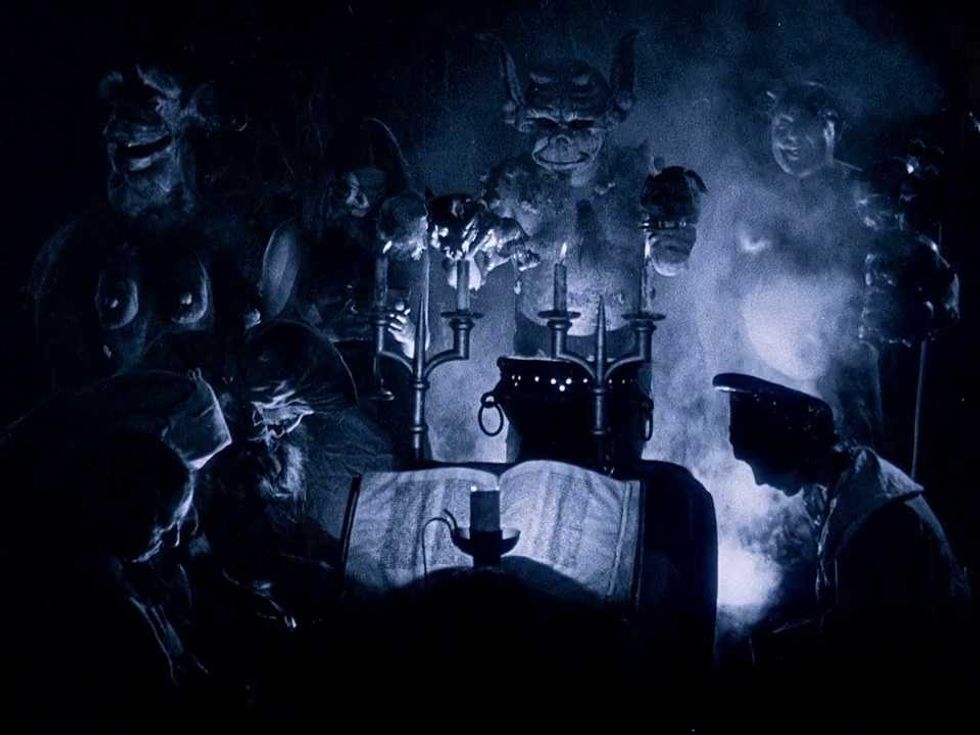 'Häxan' Credit: Svensk Filmindustri
What's New on Werwulf
Paul points out that The Lighthouse hid its ortho look inside black and white, while Werwulf puts it on display in color, much like Häxan did. If you haven't seen it, Häxan is a beautifully photographed film with crisp images and gorgeously rendered, modern-feeling tableaux.
In that era, film had to be tinted by hand, either using a dye technique on the film base or by hand-painting each frame. (Tinting was also used in the 1922 Nosferatu.)
At the time, filmmakers used a loose color code. Archivists describe amber or yellow for daylight, red for fire and action, green or blue-green for the sea and mystery, and blue as the standard signal for night.
Eggers explained the cool, desaturated nights in Nosferatu as moonlight stripping most color from what the eye perceives, so he and Blaschke aimed for that near-monochrome look (via Fangoria).
We're not saying that tinting is what was done here, but the look is very similar, and Paul points it out, too. But the truth is that for Werwulf, Eggers originally planned to shoot in black and white before switching to color, according to World of Reel. So he's starting on color stock either way.
During prep, Blaschke told Phantasmag that this one would look grim and brutal.
"The Northman was extremely clean—for 35mm anyway—with very fine grain. For Nosferatu, I let it be a high-speed film, and it's still a modern film stock, so it's not really that different. This next one, we're really going to try to give it some texture. And I've got some ideas. Early tests are very promising. It won't look like anything I've seen this decade, that's for sure."
Cinelab, which processed the film, says it will publish more about its hybrid film-digital workflow on the project later. The process involves transferring digital video footage onto celluloid, developing the film, and scanning it back into a digital file to give it the film aesthetic.
Werwulf is released in cinemas in December 2026. Let us know what you think of the look.