If This DP Started Over Today, He'd Only Buy These Four Things
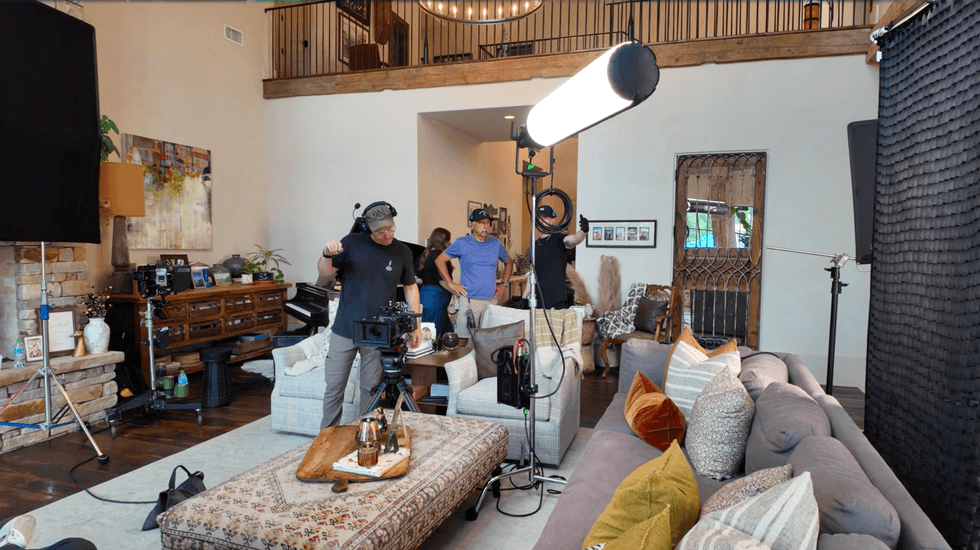
Cinematographer Keaton Nye worked his way up the camera department, from PA to AC to camera operator and then DP. He's now a commercial DP whose clients include Visit Faroe Islands, Atlantis Bahamas, Paycom, and ESPN, and he also runs a full-service production company. In a new video, Nye lays out what he'd do if he had to start over, including the gear he'd buy first, what he'd learn first, and m
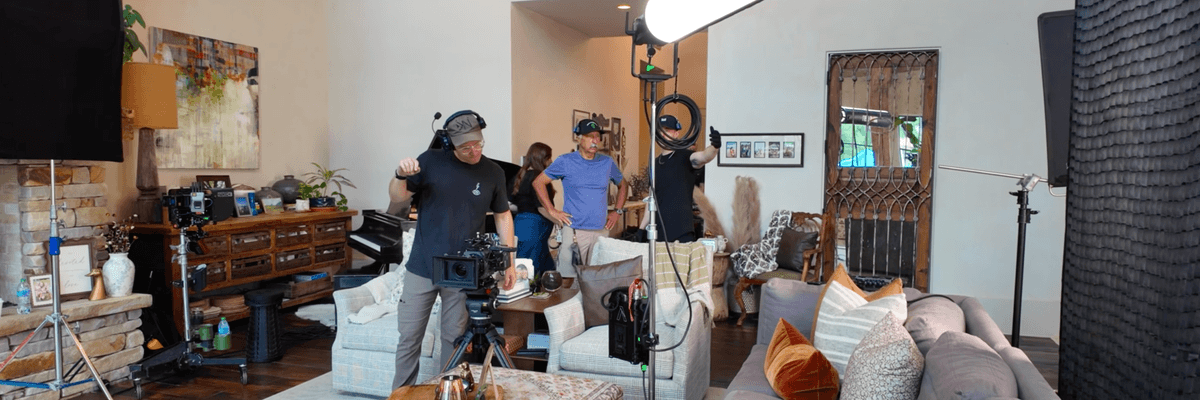
Cinematographer Keaton Nye worked his way up the camera department, from PA to AC to camera operator and then DP. He's now a commercial DP whose clients include Visit Faroe Islands, Atlantis Bahamas, Paycom, and ESPN, and he also runs a full-service production company.
In a new video, Nye lays out what he'd do if he had to start over, including the gear he'd buy first, what he'd learn first, and more. His advice is aimed at people who know they want to be DPs, but much of it applies to anyone holding a camera. Here's what aspiring cinematographers can take from his do-over plan.
- YouTubewww.youtube.com
Pick a Lane Early
When you're just starting out, you're often the whole crew, so there's pressure to learn everything at once. You're your own gaffer and grip and DP and AC and sound designer and everything in between. It's good to know a lot of that so you understand how it works, but you will eventually reach a set where some of that isn't your responsibility.
"But if I knew that I wanted to strictly be a DP, I'd stay out of the weeds on a lot of that," Nye says. "I still run my own audio on a lot of docu and corporate jobs. So, I'm not saying you will never touch it, or don't ever touch it. But what I am saying is that I wouldn't spend my first couple of years going deep on side quests because every hour that you put in on those side quests is an hour that's not going toward framing or lighting."
His advice, in short, is to protect your hours. Although there's one exception that he gets to later.
Buy These Four Things
His starter list is a camera, a lens, a powerful key light, and something to use as negative fill or bounce. For the camera and lens, he says to buy whatever leaves room in the budget for the other two.
It's important to own one good, powerful light.
"But what I like about the powerful light is you're able to learn what a source does to a subject whenever you move it closer, or you swing it to the other side, or you have enough power to diffuse it in different ways and learn what that does to a face. And with neg, you learn the other side of lighting, which is taking light away."
The light he names is Godox's Litemons LA600R, a 600W light with a Bowens S mount for modifiers.
For negative fill, he suggests a 5-in-1 or 2-in-1 reflector, which can also bounce light. As we've covered, the diffuser panel in a 5-in-1 can also soften natural light, so one cheap tool does several jobs. A black bedsheet on two stands, or even someone in a dark shirt, does the same job as a 4x4 floppy, but if you're building out a kit, you'll want a good bit of neg.
The fourth item on his list is something that helps with white balance, which Nye calls one of the hardest things to nail early on.
"You're in a room with a window on one side, and you've got warm overheads, and you don't really feel like the footage feels that off, but then once you get to the edit, you see that your colors are just not working out."
Auto white balance is the usual fallback, but it struggles in mixed light. A dedicated color meter solves this but may be outside a starter budget.
Nye's workaround is CineTemp, an iPhone app he created, which the App Store lists at $19.99. He reads a location's dominant color temperature, matches his light to that reading, and sets his camera to match.
If you don't want an app, a gray card is cheap and easy. Shooting RAW or log keeps white balance adjustable in post. The habit that matters is checking color on location, so get used to that.
Practice Light and Composition by Copying What You Love
On the DP side, trying to recreate your favorite shots is one of the best ways to learn.
"A newer camera will obviously give you more resolution and more dynamic range. But opting for a more expensive camera doesn't help you in how the light is shaped or how you're framed. And both of them are very cheap to practice. I'd sit somebody down next to a window. I'd move the key around and bring the neg in and out of the scene."
His homework is to study favorite frames on FRAMESET and in the commercials, shows, and movies you love. Then work out where the key and the neg are and try to recreate the look with your own kit.
Even if your shot doesn't come out perfect, you're learning from the process of reverse engineering.
Edit Your Own Footage
Yeah, he did start this advice by saying to stay away from other on-set jobs, but when it comes to post, he likes to be involved. This is the exception he mentioned earlier.
"There's been a lot of shoots that I thought I had enough coverage on a project," he says, "but whenever I got into an editing timeline, the editing timeline is honest with you in a way that your mind sometimes isn't. You find out pretty quickly which shots you needed for the edit and which ones you just liked, and kind of fell in love with and kept overshooting."
He says that knowing how an edit comes together still makes him a better DP, even on commercial jobs where an editor is already assigned. It helps to decide what you're shooting before you roll, instead of rolling on everything and sorting it out in post.
And when you're getting started, go ahead and PA.
"I'd get on as many sets as I could, and I would be a sponge," he says. "There's something to learn from the grips and the gaffers, the DPs, the ADs. And then what you're really doing with that learning is you're just figuring out how the whole machine works so that whenever you're the one running a show someday, you already know kind of how you would want to run that show or where you would want to improve it."
See you on set!