‘Joker’ DP Lawrence Sher Explains Why Everything You Know About Framing Might Be Wrong

Headroom is one of the earliest things you learn about framing as a cinematographer. Where do you place a person in the frame, and how much space is above or around their head, and why? As cinematographer Neil Oseman notes on his blog , beginners are taught "correct" headroom. Don't put people's heads in the middle of the frame, we're told, but at the top. It's simple, it's straightforward, there'
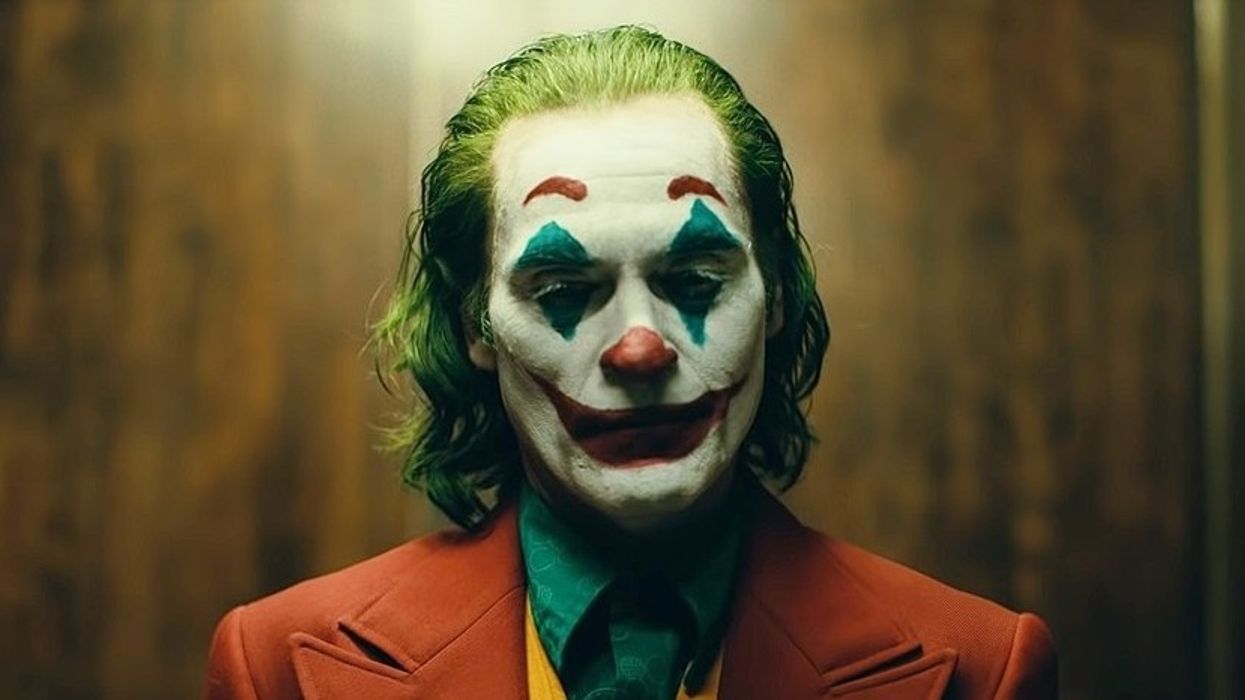
Headroom is one of the earliest things you learn about framing as a cinematographer. Where do you place a person in the frame, and how much space is above or around their head, and why?
As cinematographer Neil Oseman notes on his blog, beginners are taught "correct" headroom. Don't put people's heads in the middle of the frame, we're told, but at the top. It's simple, it's straightforward, there's nothing "off" about it. Then you get on a real set and watch DPs ignore it constantly.
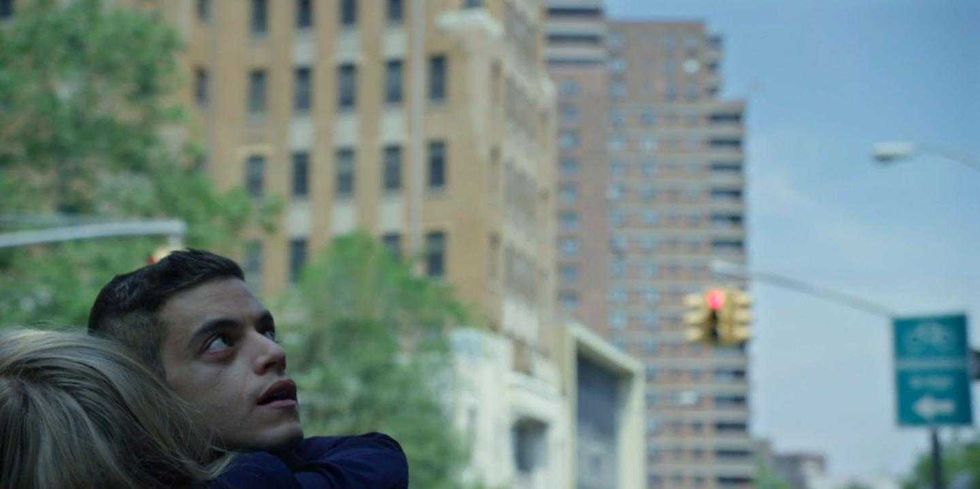
For example, you might watch a show like Mr. Robot, which, for a drama series on cable TV, felt revolutionary at the time for its off-balance framing and weird amounts of headroom. TV just wasn't shot like that, like ever. Characters would be placed low in the frame, in corners, with tons of headroom. Why?
In a new conversation on Hugo Will's CinePro channel, cinematographer Lawrence Sher digs into the topic. His Joker cinematography was nominated for an Oscar and a BAFTA, and won the Golden Frog at the Camerimage Film Festival in Poland. He's also the founder of ShotDeck, the reference library many of you probably have bookmarked.
He talks about framing trends, relying on instinct, and the influence of larger screens. Let's dig in.
- YouTube www.youtube.com
Some Framing Calls Are Pure Instinct
Every DP has notes they can't fully justify, and Sher admits he gives a lot of them.
"I give notes after every take sometimes," he says. "And sometimes it's like, it's just something that makes no sense. It's just the balance of the frame feels different or better to me with headroom that doesn't make sense to them, and I understand why they don't do it, but I'm asking them to do it because it's just something I see."
Sher is describing the moment where a DP's taste overrides what an operator would instinctively do. That is probably going to be tight headroom, with heavy left or right framing.
The defaults exist for good reasons. Learn them first so your departures are deliberate. (And remember that too little headroom makes subjects feel confined.) And be able to communicate your preferences, hopefully with some justification for the creative decision even though Sher admits it might not always "make sense."
Try Leveling Your Camera
Why not remind everyone of some practical advice, too?
When the camera tilts, vertical lines converge toward the top or bottom of the frame. Audiences may not have a name for it, but they feel it. Will says he picked up the same instinct from a different discipline.
Sher says, "I got very focused recently on a neutral tilt angle, like maybe obsessively so. It's just I always felt like either I was feeling the tilt or feeling the tilt down, feeling the tilt up. And it always bothered me, right? And so I started just like really liking a neutral tilt angle."
Sher is describing a preference for keeping the camera perfectly level, with the lens pointed straight ahead rather than angled up or down. That's what "neutral tilt" means: zero pitch on the tilt axis.
Will jumps in with his experience in real estate photography, where converging verticals are a cardinal sin. Architectural photographers use tilt-shift lenses or correct in post specifically to keep walls straight.
For your own work, a level camera reads as composed, formal, even neutral in tone. You might save tilts for when you want the audience to feel something off.
 'Mr. Robot' Credit: USA Network
Why Big Screens Pull Action to the Center
Continuing from that point, Sher connects neutral tilt to Christopher Nolan and IMAX.
On a screen that large, he says, "it looks strange when it's sort of tilted up."
Will picks up the Nolan thread with a theory about why centered framing took hold. As one of the filmmakers who brought IMAX cameras into features, Nolan ran into a problem with standard dialogue coverage.
In a normal two-hander, you frame one character to one side, then cut to the other character on the opposite side. On a TV or a regular theater screen, that back-and-forth is easy to follow. On a screen several stories tall, Will says, it turns into a workout. Viewers end up physically scanning side to side to find whoever's talking, and over a long scene that gets exhausting. His takeaway is that Nolan's later films keep the action centered so the audience never has to hunt for it.
Nolan has described centering as a deliberate system, though his stated reason is just practical. In a 2023 interview with the Associated Press, updated this year for The Odyssey (AP via WTOP), he said his team began "center punching the action" so that nothing is lost, starting with The Dark Knight.
On IMAX 1.43:1 (the massive square screen), the screen is huge and nothing gets cut off. For other formats like 35 mm, digital, and CinemaScope, the top and the bottom get cropped. So it's more a choice of framing for multiple aspect ratios.
 'Joker' Credit: Warner Bros.
Framing Trends Come in Waves
Regardless of the reason, Sher says that Nolan helped make centered framing feel like a mainstream convention.
"He pushed it, he pushed, he embraced it, and made it a real stylistic thing," he says, "and so I think it brought attention to that stylistically, so you could point to that if somebody was like, 'What does that mean, all this extra headroom?' You could point to that."
Mr. Robot became the TV poster child for oversized headroom. Awards Daily notes the show drew praise in its first season for its unique, gritty look cultivated by Esmail, which included lots of headroom in frames as a shooting device in addition to putting Elliot in the corner of a frame to make him look isolated.
Trends are fine to borrow. Just know why you're borrowing one.
Reverse Engineer Shots to Train Your Eye
Sher has spent years matching other people's photography on reshoots. He describes doing additional photography on The Secret Life of Walter Mitty, which was shot by Stuart Dryburgh. Scenes of Walter's everyday life were filmed on spherical lenses, while his "fantasies" were shot anamorphically, and that's something Sher had to almost reverse engineer.
Which brings us to the ShotDeck Recreations contest. Sher launched the contest in 2020 during the pandemic as the "Shot in Isolation" challenge, encouraging filmmakers to recreate famous movie shots at home, all DIY.
"Yeah, the recreations are fun. They're really hard, but they're great. They're really great ways to learn, incredible ways to learn about how somebody got to where they got. It's all the same things like, 'Oh, what is that? Is that sun? Is that a light?'"
So go get practicing!