The Old Film-Set Ritual That Still Saves Shots on Digital Sets
Making a movie is one of the most tedious things you can do as a pastime, if you're doing it right. You're setting up shots, finding the right angles, getting the lighting perfect, hyping up your actors... all before you roll. So when you do roll, you don't want some silly little mistake messing up your frames. In ye olden days before digital filmmaking, you might run into a particular issue on fi
Making a movie is one of the most tedious things you can do as a pastime, if you're doing it right. You're setting up shots, finding the right angles, getting the lighting perfect, hyping up your actors... all before you roll. So when you do roll, you don't want some silly little mistake messing up your frames.
In ye olden days before digital filmmaking, you might run into a particular issue on film cameras. So in an old print, you could sometimes see a squiggly dark line twitching at the edge of the frame for an entire shot.
That's a hair in the gate. On a film set, the defense is a three-word call you'll still hear today.
"Check the gate."
Just because we're in this territory, I wanted to add the cue you hear before every take, when the sound mixer answers, "Roll sound," with "Speed."
A new StudioBinder explainer walks through checking the gate. We're going further into where both calls came from, why film's comeback keeps them relevant, and what they mean on a digital set.
Check out StudioBinder's video below.
- YouTube www.youtube.com
What the Gate Is, and What Counts as a "Hair"
On a film camera, the gate is the opening that holds each frame still behind the lens while it's exposed. Anything lodged there gets photographed on every frame of the take.
The name is maybe a little misleading. Novelist Jasper Fforde, a focus puller before he wrote books, explains on his site that loose slivers of film stock can catch in the gate and show up across an entire take, looking as big as a tree trunk. Actual hairs, lint, and dust count too.
Obviously, as StudioBinder points out, "Hairs can ruin a shot or even an entire scene, and are nearly impossible to remove in post-production without digital effects."
The only prevention is a careful check, an added step during production. But it beats costly post work.
A Ritual Nearly as Old as Movie Cameras
A May 1936 issue of Amateur Cine World, digitized by the Media History Digital Library, told home-movie makers to clean the gate whenever they loaded new film, warning that even a tiny hair at the aperture's edge could cause problems.
On the Cinematography Mailing List, members told horror stories of things lodged in camera gates.
"The strangest one I have seen was during a telecine session where the entire outline of a large fly could be seen lodged in the top of the frame during an entire roll of film," Ed Colman wrote. "They shot three setups before cleaning the gate, and did not go back to redo the 'flyed' footage."
Conditions matter too, and will obviously change when you change locations. In another CML thread, a Kodak-side respondent explains that bone-dry desert air builds up static, which helps stray dirt cling to the film roll.
How the Check Works
How would this work on a traditional film set?
First, the AD calls the check when the director is ready to move on.
The 1st AC then does one of three things. They pull the lens and shine a light on the gate. They look through the lens with the iris wide open and focused at infinity, so the glass works like a magnifier. Or they remove the gate entirely, on cameras that allow it.
"Ironically, the process of checking the gate is when there is the most danger of hair or debris getting into the gate, so it's important to be careful," StudioBinder says.
If the AC calls "good gate," the company moves on. If there's a hair, the script supervisor flags the take, and you go again. Better to try again now than realize you have a mistake later, and have to call everyone back to a location.
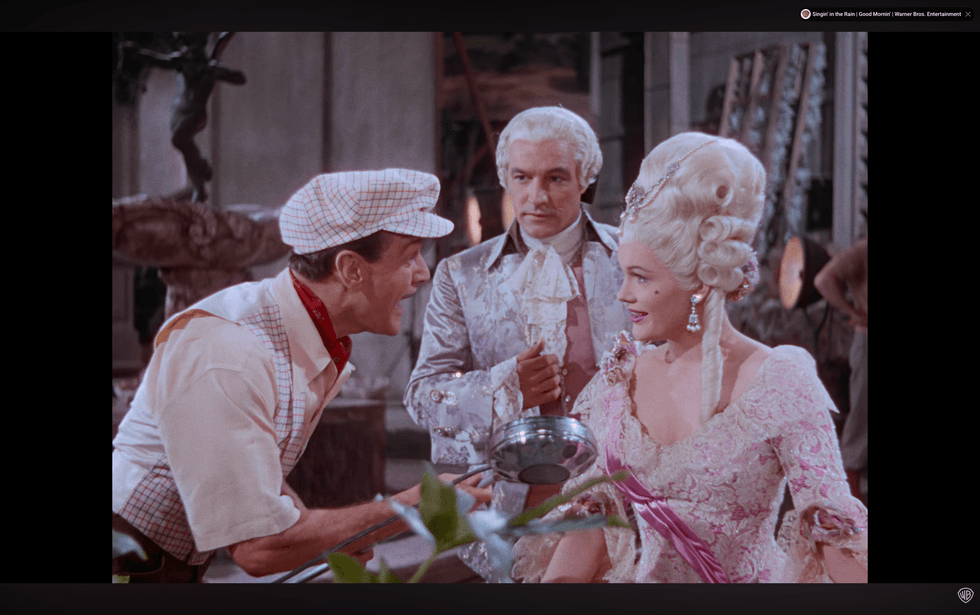
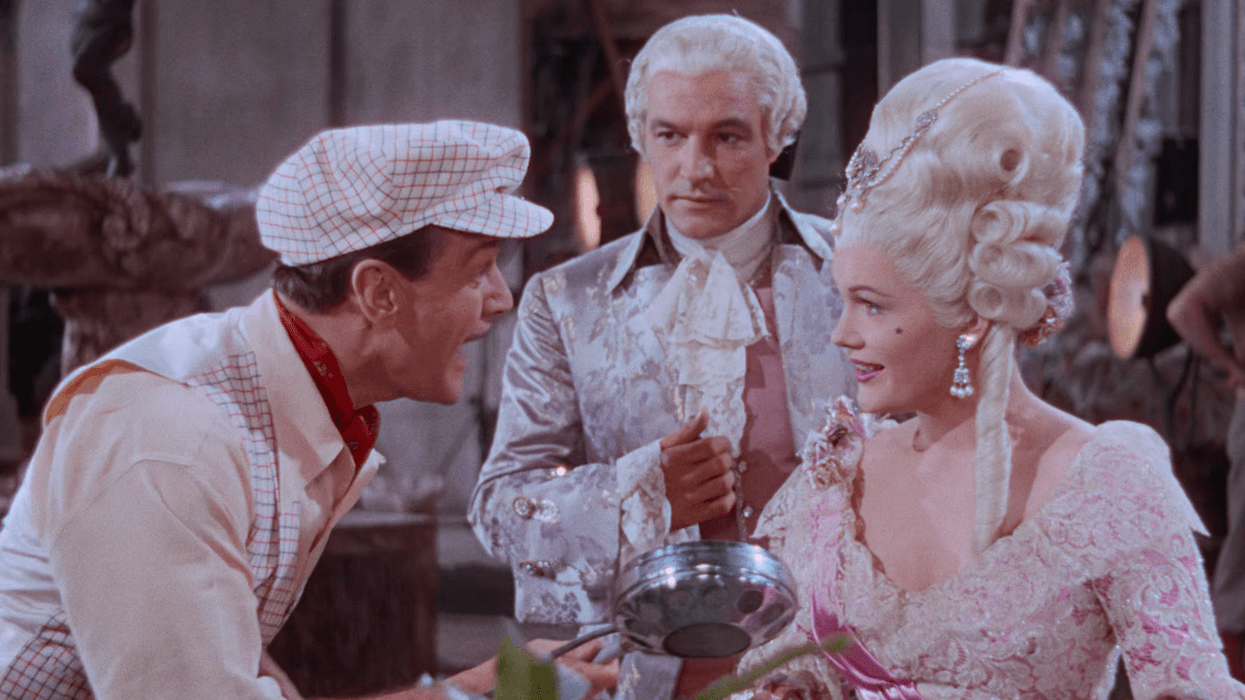
 'Hail, Caesar!' Credit: Universal Pictures
Film Is Back, and So Is the Gate Check
As you probably know, film is seeing a comeback. Per CineD, Kodak stock was behind three of the five Best Cinematography nominees and half the Best Picture field at the 2026 Oscars. The Odyssey used upward of 2 million feet of Kodak 65mm stock (per WHEC).
Working with film stock is much more expensive than shooting digital, so it does require a great deal of discipline, and checking the gate is part of that process.
For smaller indies working with film, Pro8mm recommends regularly brushing your Super 8 gate, since emulsion residue can build into dark blobs along the frame edge, and warns that cotton swabs can leave fibers behind.
Checking the Gate on a Digital Set
Things have changed, but lingo on film sets hasn't. You might hear a call to check the gate even if celluloid is nowhere on your set.
"You may hear someone calling out to check the gate is shorthand for reviewing shots before moving on," StudioBinder says. "After all, gates aren't the only pieces of equipment that can get dirty."
For example, DITs might pull the lens mount at the start of each day and visually inspect the sensor for dust. Pomfort has a workflow for detecting sensor dirt with Silverstack and Livegrade.
If you don't have a DIT, shoot a test frame. Sony suggests shooting a white wall or clear sky at around f/11 and checking the result.
"Speed" Is the Other Call That Outlived Its Machine
I just started work on my feature, and I found myself so chuffed at how the sound mixer responds to a call to roll sound. "Speed!"
New filmmakers might assume it's just a cool way to say "go." But the word was literal. Analog Nagra tape recorders needed a few seconds to reach a stable speed that matched the film camera, and so did DAT machines after them. So "speed" meant sound was recording at the right rate and would sync with picture.
Today's digital recorders don't spin up at all. Some capture audio before you even hit the button. Sound Devices built a pre-roll buffer into its MixPre recorders, holding five to ten seconds depending on the model. So the call has shifted from a mechanical report to a human one.
On an indie set without a dedicated mixer, keep the call anyway. Whoever runs sound should only say "speed" after confirming the record light is on, though. Don't say it out of reflex, no matter how cool it makes you feel.