What 7 Years Financing 'Breeder' Taught Alex Goyette
In 2019, Alex Goyette sat down to pitch Breeder at Tribeca's Creators Market , and his iPad died right before the pitch. Seven years later, the same festival gave the film its world premiere. Goyette is an indie filmmaker whose blueprint many of us likely want to follow. He started, like many, on YouTube making comedy shorts. He started his YouTube channel in 2011, while he was still in film schoo
In 2019, Alex Goyette sat down to pitch Breeder at Tribeca's Creators Market, and his iPad died right before the pitch. Seven years later, the same festival gave the film its world premiere.
Goyette is an indie filmmaker whose blueprint many of us likely want to follow. He started, like many, on YouTube making comedy shorts. He started his YouTube channel in 2011, while he was still in film school. The sketches he made there led to his first paid directing job at AwesomenessTV. He directed the 2014 comedy Expelled. Breeder is his first horror feature.
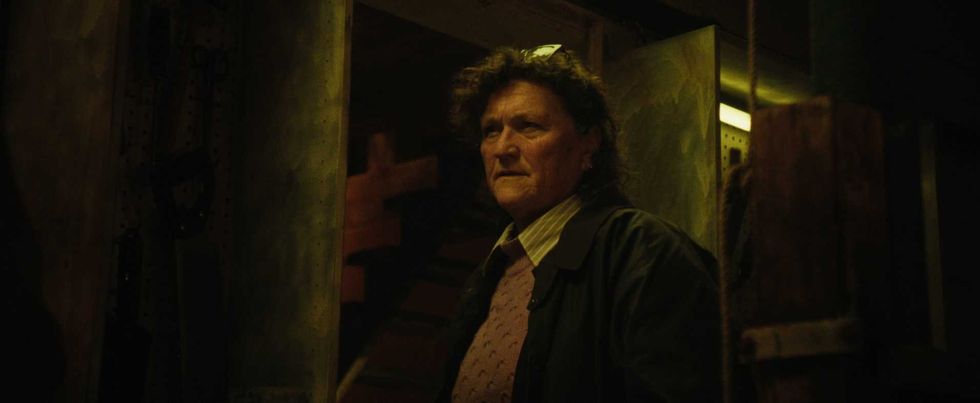
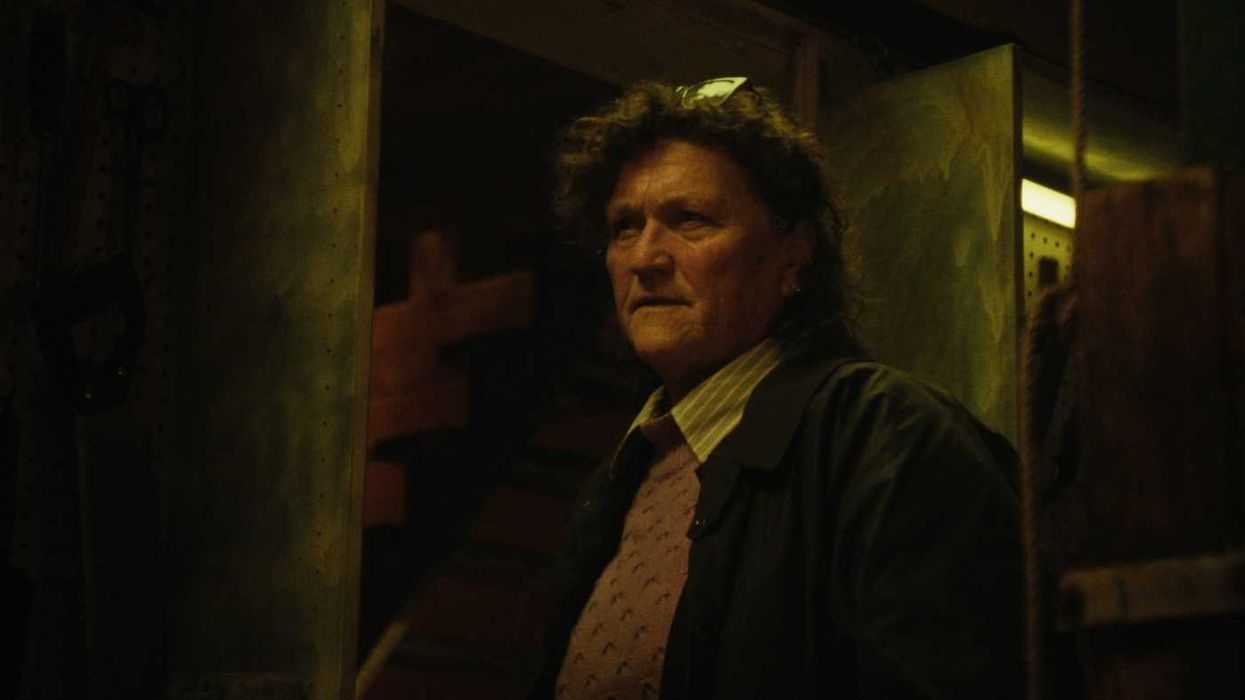
In the film, Russell (Daniel Doheny) is a college student trying to save endangered bees and can't get funding. Patti (Dot-Marie Jones), a poodle breeder who lives off the grid, offers him money, but there's a condition. He has to... breed with her daughter. Maddie Phillips and Tanaya Beatty also star.
Goyette wrote, directed, and edited the film, which comes out Oct. 28. This was a project he spent years writing and fighting for. We spoke with Goyette ahead of the release to learn the nitty-gritty of making an indie film, including the headaches of pitching and financing.
- YouTube www.youtube.com
Make Your Bad Films Fast, Then Move On
His YouTube channel was part of his film school training. He and a few friends made one sketch a month while he was still in film school. He learned editing, VFX, motion graphics, and color because no one else was going to do it. Many filmmakers point to these reps as necessary learning steps.
"I think Robert Rodriguez says that everybody has 10 bad films in them, and they have to get them out before they get to the good stuff," he said. "I always found that to be a really interesting way of looking at a body of work and developing the sort of skills that make you efficient on set. I made a lot of bad films very quickly with YouTube and eventually started making stuff that I was really proud of."
A monthly deadline doesn't leave room to be precious about any one project. Goyette said making things on that schedule took his work "off the pedestal." He stopped believing he needed a Kickstarter campaign before anyone would care.
When a short didn't get into the festivals he wanted, he uploaded it and moved on to the next one.
Hollywood is watching the numbers. Studios have started treating YouTube as a scouting ground for talent and ideas, and Goyette sees the same pattern from his side.
"It seems like view counts and follower counts and who likes what on the internet seems to be an incredible driving force for production companies and studios," he said. "At Tribeca, I had some people approach me after our premiere screening asking me about what's the best next thing that they could do with their career. The advice that I always give is to create a portfolio on social media, whether that be TikTok, Instagram, or YouTube."
Goyette doesn't think your online work has to be prestige shorts. He said a sketch that grabs people counts as much as a narrative short. When producers have asked whether he has sci-fi, comedy, or commercial work to show, his YouTube catalog was the proof of his abilities.
Plan the Whole Movie Before You Get to Set
Breeder didn't have the budget for a storyboard artist. Goyette boarded it himself, every shot of it.
"So before we had done our location scouts, I had storyboarded a chunk of the film in Procreate, and that was just all done by hand. And it wasn't until my DP introduced me to using scans that that process became far more efficient for me."
The Instagram Reel above popped up naturally on my feed, and I was immediately impressed with Goyette's focus on efficiency and planning.
"I had an app called PureRef on my PC. I would screenshot the scan from the angle that I wanted and then drag that into PureRef and draw stick figures over that. And then I would just label them, P for Patty, R for Russell, and then go from there. And that was a really, really efficient way to get all of the shots on the board. And then we would drag those into Google Sheets so that we had all of them listed out with the focal length, the gear that we needed for it, and the camera movement."
The end result was a 72-page shot document. Goyette kept it on an iPad strapped to his body for the entire shoot, and he said his crew almost never had to ask what came next.
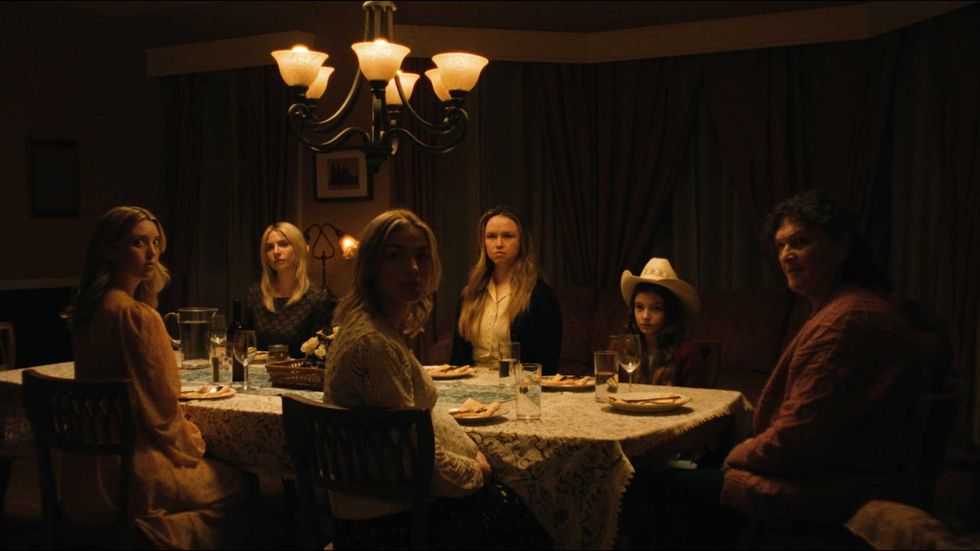 'Breeder'Credit: IFC
Get the First Money, Then Stack Credibility
Goyette wrote Breeder to be cheap and contained, with the original plan being to shoot it for $250,000. Then backers kept dropping out. One passed over the film's sexual content, and another promised half a million and then disappeared.
He said the people offering the biggest checks usually turned out to be the least reliable. So the team changed strategy.
"The first in money that we got was $75K, and that was somebody that we knew from a friend of a friend," he said. He pitched that person. "And that was a huge moment for us, because the hardest money to get for a film is the first little crumb. We got around a million dollars for this. It's a very small portion, not even 10%, but it gets the snowball rolling down the hill. And now you can say you're partially financed. So you get your first in money, you're now partially financed, and you can say that in all your emails, and you go out with that. And we went on this journey of collecting accolades, trying to make that intro email look as good as possible."
Those two words, "partially financed," change how an investor reads your email. Without stars attached, Goyette needed other things to put in that email, so he entered screenwriting contests. The script won the Grand Prize at the 2023 Cinequest Screenwriting Competition, and he said it was recommended on The Black List.
The final piece came from luck. An actor Goyette knew asked what he was working on, and the script passed through a couple of hands until it reached K. Asher Levin at Rabbits Black. Within two weeks, there was a finance agreement in Goyette's inbox.
Collect Your "Nos"
Seven years of investors vanishing does something to you. Goyette didn't trust the money until he could see it.
"I think that my advice to anybody that is raising money for film is it's a marathon, and you're going to deal with a lot of disappointment, and you have to tell yourself that."
The team kept a mantra for every rejection.
"The phrase we always used was 'onwards and upwards.' We would all say it on the call. It would be like, 'Oh, this guy passed. Onwards and upwards.' And you just have to learn to find the joy in all of the different nos because each one gets you closer to the yes.
"I think we probably got 300 nos on this project, and it didn't mean that it was a dog shit project. ... It's every indie filmmaker's dream to premiere at one of these festivals, show it to an audience, and then get a distro deal. So all of the people who said, 'I don't know what to do with this, I don't think this is marketable, this isn't worth my money,' we still somehow, someway got it done. And now, after all said and done, there are a lot of these people that have circled up and were like, 'Oh my God, I never read it. I feel awful.' ... We got rejected from a number of different festivals, and then once we got into Tribeca, some of those festivals circled back around and were like, 'Actually, we want to screen your film now.' So it is like, if you get one yes, then everyone dogpiles on, because then suddenly they're paying attention. So yeah, you got to remain optimistic."
Breeder opens nationwide Oct. 28.