Who Was Under the Mask? Who Played Ghostface in the Original 'Scream'?

Yeah, yeah. Everyone knows the movie reveal. Billy and Stu are both mad killers, and the mystery is solved—there were two Ghostfaces all along. But that’s only the story answer. The production answer is more interesting. Scream turns 30 this December. It opened on December 20, 1996. Horror icon Matthew Lillard took the original on the road in September, hosting screenings and fan Q&As in Dallas, H
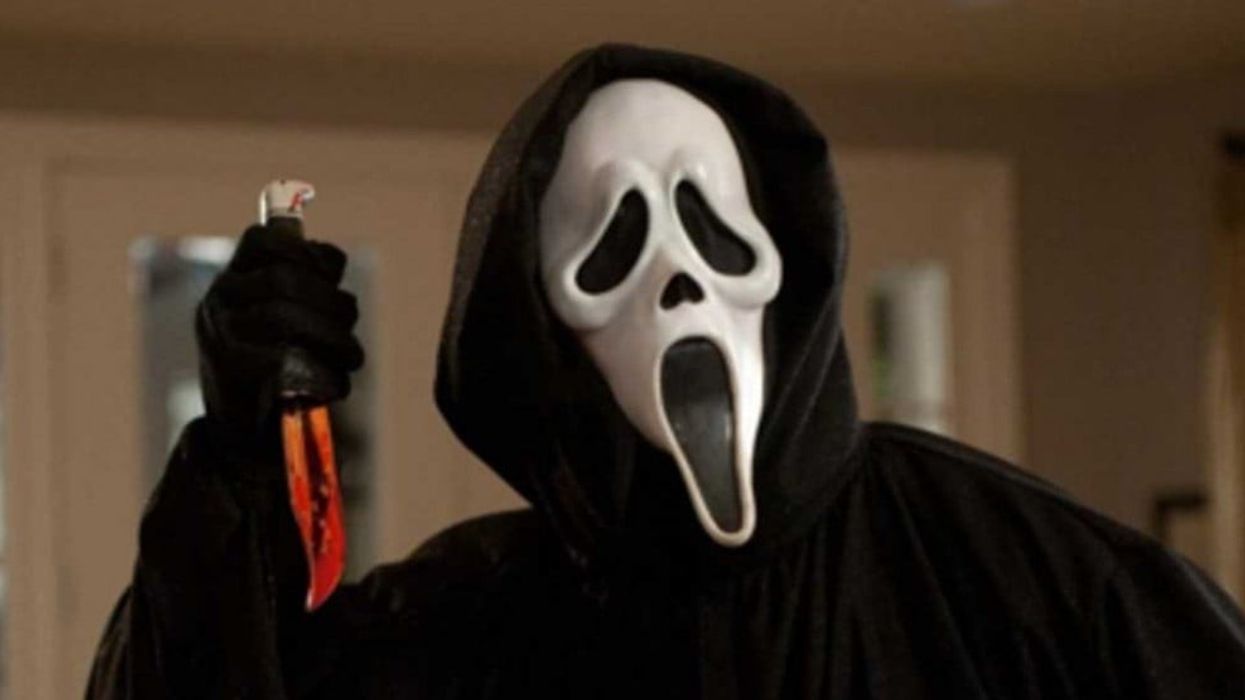
Yeah, yeah. Everyone knows the movie reveal. Billy and Stu are both mad killers, and the mystery is solved—there were two Ghostfaces all along. But that’s only the story answer. The production answer is more interesting.
Scream turns 30 this December. It opened on December 20, 1996. Horror icon Matthew Lillard took the original on the road in September, hosting screenings and fan Q&As in Dallas, Houston, and Austin, and Paramount announced a re-release of the original Scream in select theaters on October 30.
For the plot and the production, Ghostface was a team effort. It required two characters, a couple of stunt performers, a voice actor hidden on set, and a store-bought mask.
We’ll walk through who did what, and what filmmakers can learn from a villain built in bits.
- YouTube www.youtube.com
The Story Answer: Billy and Stu
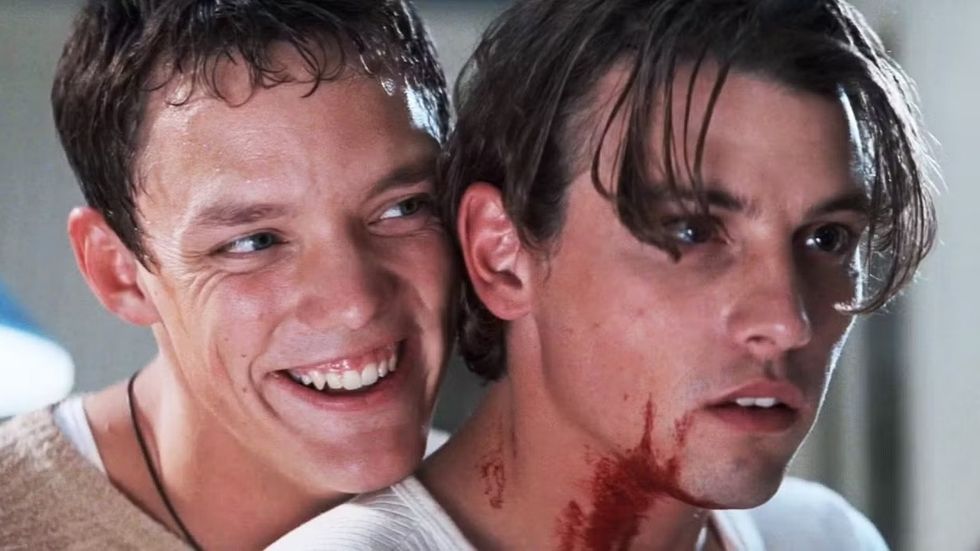
Inside the movie, the killers are Skeet Ulrich’s Billy Loomis and Lillard’s Stu Macher, a couple of crazy kids. A year before the movie starts, they killed Sidney’s mother, Maureen, whose affair with Billy’s father had split up his parents.
The twist depends on Ghostface being two ordinary teenagers, not a supernatural force. That’s also what let the production spread the physical role across multiple people without anyone noticing.
We love having an in-world story reason for any inconsistencies, not that they're noticeable.
The Bodies Under the Robe: The Stunt Performers
In most slashers, the person under the mask isn’t the actor you see when it comes off. Most of the time, the slasher is engaging in a lot of stunts, and in a film a stunt can mean almost anything—a fall, a jump, etc. So if the face isn't seen, it's easier to go with stunt safety and specialized movement via a stunt performer rather than Ulrich or Lillard. That keeps the cast’s schedules free, too.
IMDb’s full credits list Lee Waddell as Ghostface and Dane Farwell as a Ghostface stunt performer, both uncredited on screen. Anthony Cecere is listed as stunt coordinator and also as a Ghostface performer.
Deep Focus Review gives Farwell the lion’s share of the on-screen Ghostface work and even says Wes Craven put on the costume himself for parts of the opening.
According to Halloween Daily News, Waddell was the first in the costume. Waddell told the outlet:
"I was like, ‘Wes, tell me about this character,’ because I have wardrobe on, I have the mask on, and we’re getting ready to start shooting. And he goes, ‘He moves like a phantom. Very swift with how he moves, and he moves with authority.’"
Unfortunately, the mask left him with almost no sight while he chased Drew Barrymore over soaked grass. Craven filmed the chase at a higher frame rate, so it would play back in slow motion and drag out the suspense.
- YouTube www.youtube.com
The Voice: Roger L. Jackson
Jackson told The Hollywood Reporter:
"It was an open casting. I heard some people saying, 'My agent told me they’re looking for the new Freddy Krueger,' and I read the sides and I said, 'This doesn’t feel like Freddy Krueger.' This is somebody who has to be interesting and kind of flirty and keep her on the phone, make her interested. I subsequently found out that this was to play the scene with Drew Barrymore because she didn’t want the script person just feeding her lines. So they cast in the Bay Area for that and then they were going to dub it later in Los Angeles. But Wes Craven liked what I was doing and they decided to keep me.
Jackson spoke his lines in real time from a separate room, and the production deliberately kept him out of the actors’ sight.
Editor Patrick Lussier recalled that none of the calls were added in post. Jackson delivered every one during takes.
"All those phone calls were done live," Lussier told The Hollywood Reporter. "They were tapped into a phone, but Drew and none of the actors could see him. They didn’t know what he looked like."
Even in the opening, Jackson was hiding outside. Which means the voice of the killer was literally lurking outside the house, watching the victim. It’s a perfect image for how Craven blurred performance and menace.
"I remember hearing that they had somebody reading for Drew off camera," Ulrich told the outlet. "There were talks that he was hidden away, but it never really crossed our minds. Afterward, it’s really wild to realize what Wes did and how great a decision that was. To have the wherewithal to give her something visceral to react to was very smart."
Lussier told Bloody Disgusting that Craven auditioned a second voice late in the edit as a gut check, and Jackson’s won out.
 'Scream' Credit: Dimension Films
The Face: A Halloween Mask Nobody Wanted at First
The final “performer” is the mask itself, which is of course iconic.
Deep Focus Review explains that Fun World was already selling the mask before the movie existed. Designer Brigitte Sleiertin modeled it on a cartoon ghost from a 1933 Betty Boop short (rather than on Edvard Munch’s painting The Scream, despite what many think). The company signed off on the license, betting the film would boost sales.
Producer Marianne Maddalena told Fangoria:
"Well, it's just a thrill to me because I knew when I first laid eyes on that mask that it was special and magical. I'm fascinated with the origins and if you go to my website you can see some of the earliest designs of what would become the mask and it's still a mystery to uncover just who exactly came up with the original design and how it ultimately ended up being used in Scream and became this cultural icon."
In Maddalena’s telling, Craven originally turned the mask down because he wanted an original design. The team went back for it weeks later, after nothing else clicked.
Filmmakers, you don’t need a famous face behind the mask. You need a clear note on how the killer moves, a voice that gets under your actors’ skin, and a design that reads instantly in silhouette.