Why the Horror Thriller 'Cruel Hands' Was Largely Shot Like a Western
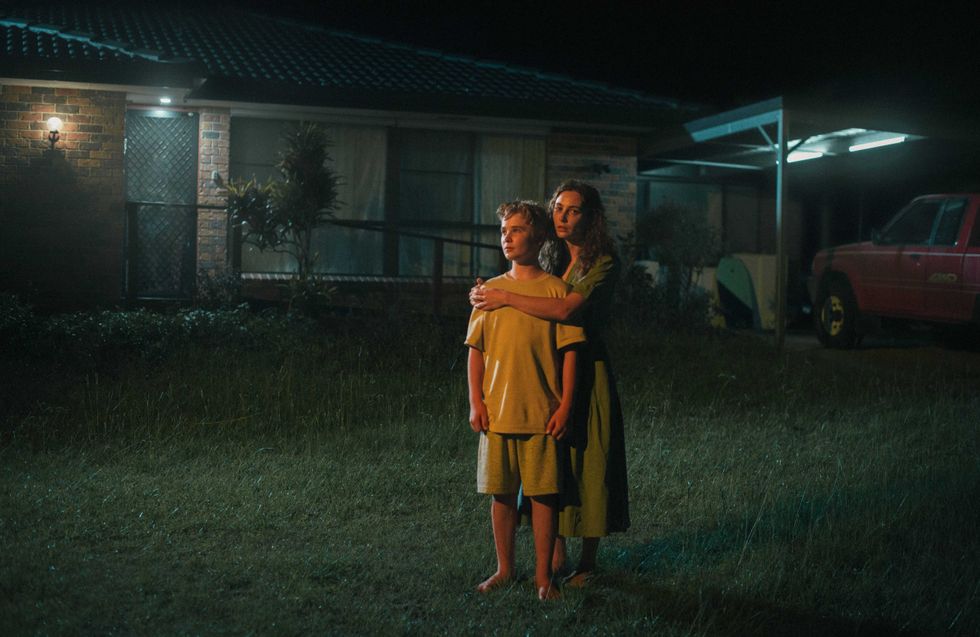
What happens when a horror thriller borrows the visual language of a western? A feature like Dark Sky Films’ Cruel Hands is born. The synopsis for the film reads: Amid the worst bushfires in Australia’s history, Maria (Mavournee Hazel) and her son Dai (Diesel La Torraca) escape a violent and abusive husband and make their way to an abandoned farmhouse. While hiding, Maria tries to create a new hom
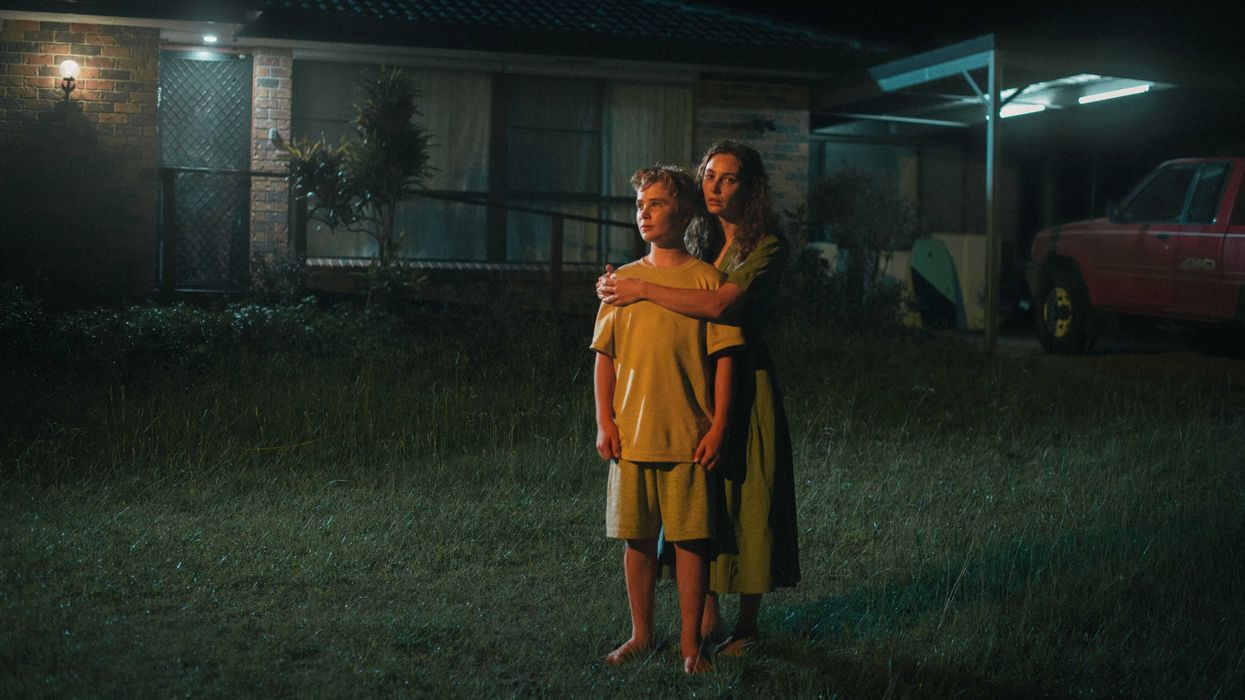
What happens when a horror thriller borrows the visual language of a western? A feature like Dark Sky Films’ Cruel Hands is born. The synopsis for the film reads: Amid the worst bushfires in Australia’s history, Maria (Mavournee Hazel) and her son Dai (Diesel La Torraca) escape a violent and abusive husband and make their way to an abandoned farmhouse. While hiding, Maria tries to create a new home for Dai as Jason (Josh McConville), the police, and the fires close in. In a climactic battle, two damaged, traumatized parents fight over Dai's fate, with deadly consequences.
For Cruel Hands, DP Charlie Cole used bold compositions, locked-off frames, and deliberate dolly movements to give the film a Western-inspired aesthetic, heightening the tension as a man hunts down his estranged wife and child.
The result is a striking visual contrast between the film’s suspenseful pursuit and the more intimate, emotionally grounded moments at its center.
In the interview below, Cole breaks down the cinematography behind Cruel Hands and discusses his collaboration with longtime friend and director Al Kalyk.
Cruel Hands is available to rent or buy on Prime Video. It is also available on Plex.
- YouTubewww.youtube.com
No Film School: How did you first discover your passion for cinematography? Was there a particular film whose visual style or cinematography made you realize this was the path you wanted to pursue?
Charlie Cole: I fell in love with cinematography through a handful of films that I saw within a year. At the time, I was a Drawing major at Pratt Institute, and my roommate and I watched Enter the Void and Antichrist. A few months later, I watched Requiem For A Dream - those 3 films together shook me out of wanting to be a fine artist, and pulled me into the life of filmmaking. All of them shared a similar approach to me: If you have a challenging (hard to watch) script, shoot it beautifully - this will make the audience engage with the poetry of the visuals and open their hearts more to what the film is saying. If people are prepared for a jump scare, they are guarded. These three films impacted me so deeply, and I think a large part of that is due to the cinematography being quite poetic in each case. I watched them unguarded, and therefore the films affected me deeply.
NFS: How did you become involved with Cruel Hands and what did pre-production look like for you?
CC: The director, Al Kalyk, and I attended the American Film Institute together and had worked on several projects. He has become one of my best friends, and it just felt right that I would shoot his first feature. We had been talking about it on and off for a few years before it got wings and financing. Pre-pro was 6 weeks in Australia. We shot the film in January. (Australian summer), so we did about a month of solid prep on the Gold Coast (where the film was shot), then 2 weeks of Al and me prepping over Christmas and New Year's while in Sydney. It was a pretty magical experience. One I hope to get to experience again.
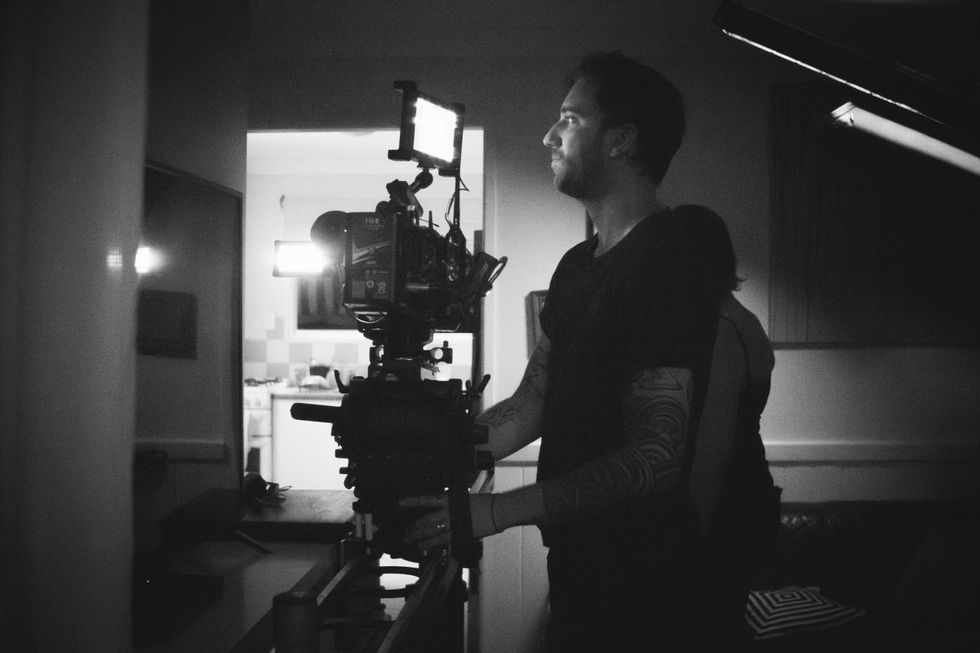 DP Charlie Cole on 'Cruel Hands'Credit: ProjectionPR
NFS: Can you talk about the collaboration between you and Cruel Hands director Al Kalyk? How did you align your artistic visions for this project?
CC: Our collaboration was very friendly and trusting. Al and I are like brothers. My initial thoughts for the visuals on the film were far more brooding and muddy compared to where we landed. I had sent Al a fairly extensive lookbook, which served as my initial take on the script before seeing any of his ref images. Immediately, Al let me know I was wrong (in a loving way). He had this wonderful idea to shoot this film in part like an old western film. Ultimately, the film lends itself to both styles, I feel: There’s a duality between bold-angled, western locked-off or dolly shots when we’re in the thriller parts of the film where Jason is hunting down his ‘escaped’ wife and child, and a more delicate sensibility when we are sitting with Dai and Maria, a mother and son trying to emotionally survive this new chapter in their lives and hopefully get closer along the way.
Visually, Al and I are quite in tune stylistically. We’ve never really had issues syncing up with how we both feel about images. Al brings a lot of paintings as references, while I bring a lot of cinematic references. During prep, I put together a Visual Bible of the film, which is every scene broken down into Tone, Lighting, and Framing. I make sure that Al approves of every image, and it’s built very much based on our conversations about the film and how the visuals push the story forward. After about a month or so of putting that document together, the film’s visual language is very fine-tuned. Now it’s just a matter of making it.
NFS: Walk us through your camera, lens, and filtration choices, and how they supported the tone of Cruel Hands?
CC: Right off the bat, my instinct was to shoot this film in Large Format. We were going to be dealing with small rural spaces that we wanted to feel Cinematic. LF was our choice to capture that, but we were naturally concerned with the lens choices available, especially since we were locked into a rental house in rural Australia that our Producer had set up an excellent bargain with. Luckily for us, the rental house (Cine 2481) had everything we needed!
After 2 days of testing, we ended up selecting the following combination:
- CAM: Mini LF (4.5k Open Gate)
- LENSES: Leica R
- FILTRATION: Low Con // Black Satin
One of our main references for the look of the film was Phantom Thread. We wanted to create a softness and delicacy in the lenses that counteracted the boldness of the western style (dolly push-ins / tense angles, dark lighting). I’m very happy with where we ended up.
NFS: Looking back on Cruel Hands, is there a creative or technical achievement you are especially proud of that viewers may not realize while watching the finished film?
CC: The film takes place during the wildfires of 2019, so we knew we would have to build that look into the world. The air gets choked with smoke, and all the light turns a deep orange. So, in the third act of the film, when the fires have started (further away from our character, but slowly impeding), we build the intensity of smoke and color. To achieve this, we had to instill a strict ‘no direct sun’ rule for shooting any scene that took place in the third act. This meant only shooting exteriors at dusk, dawn, or overcast moments (rare in Australia’s summer). Then we had an amazing, helpful team of art department / PA’s / grips who would help control the 2 household hazers and 1 fogger; we had to spread out the smoke as best we could. I’m really happy with the effect of feeling like you’re surrounded by wildfires. So much of what you see in the film is all practical. Color (done by Al Kalyk), of course, helps a ton with the feeling of burnt skies, along with additional smoke effects added in post by our VFX team for the final scenes.
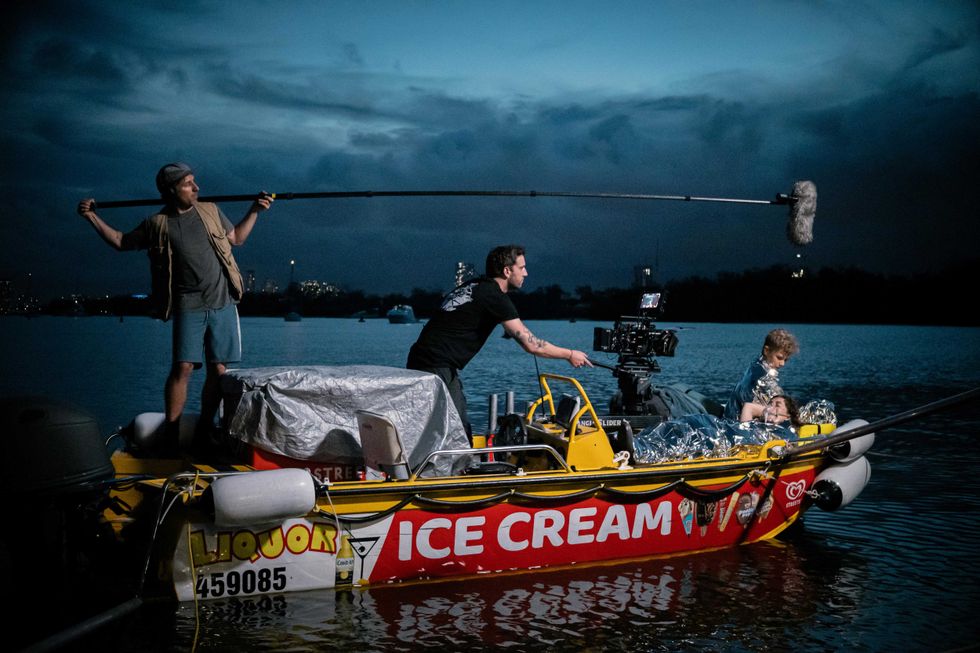 'Cruel Hands' BTS Credit: ProjectionPR
NFS: You also had a film, Corpus, recently premiering at the Fantasia International Film Festival. Can you tell us about the look of that film?
CC: Oof, that is a fun film. The film takes place in the early 2000s NYC and is an erotic body horror thriller. The film is a mix of the NYC club scene, dingy apartments, and a remote mansion in upstate NYC. The look of the film ranges within those worlds; director Corrin Evans and I maintained deep colors and sensual tones. The film is meant to feel hot and sweaty, full of shadows. It is for sure a summer movie- we shot on the Super Baltars for a rich, warm, human feeling. Production Designer Sadra Tehrani brought so much of this world to life, and we collaborated in incorporating so much of the lighting into practicals. The whole film is shot with Tungsten and HMI lighting for a heavier, more period-honest look. The majority of the shots and setups were oner-focused, letting the handheld camera roam around the characters, with little to no marks and a guided sense of where we needed the emotions to come out in the scenes. The actors were amazing, very game for all of it, extremely consistent and dedicated. Focus Puller / 1st AC Julia Crytser made so many of the moves possible. We were almost always shooting wide open on a 100mm with no marks, just flowing.
Corpus also just won Best Cinematography at Brooklyn Horror Fest! I just found out this morning, as I’m writing this.
NFS: Both Cruel Hands and Corpus fall into the horror genre. Why do you think you've found such a strong creative home in the genre, and what keeps you returning to it?
CC: I love the horror genre! I like when it’s mixed in with other genres. Horror - thriller /drama/romance. Horror tends to bring a tension in the tension. There is inevitably some duality, deceit, mystery, and intrigue. All of these lend themselves to interesting images and approaches. In horror, you can go so many visual routes. It can be clean and disturbing (Backroom, Midsommar, The Substance) or gritty and dark (Blair Witch). Underneath it all, with both Cruel Hands and Corpus, it’s a story of longing for those you love, and how you’ll do anything to be closer to them.
NFS: What sequence in both Corpus and Cruel Hands required the most planning, and how did you and your team execute it?
Cruel Hands has a big, fiery, violent climax (sorry, spoiler!) That was a difficult sequence to pull off; we had a large wide, stunts, weapons, fire, smoke, and of course it took place at dusk. We also needed a very specific terrain (a clearing within a forest) and a fallen tree that one of the characters hides behind (this tree ended up being dragged in through the forest on a forklift - Australians will get the job done, let me tell ya). We pulled this off with elaborate planning and several scouts. The fire effect was kind of simple when you break it down. Large sources far away, and hidden behind tree lines, hills, bushes. Then blast them with smoke so we get a huge backlight. The smoke helped us light because it carries the light everywhere. Supplement with a few lights and voila — fiery climax smoke battle!
Corpus had a few challenging scenes. The climax is (surprise surprise) also violent. This scene has a bunch of stunts and prosthetics involved, and took 2.5 days to shoot. The scene is in a large room with tons of windows. Of course, the first day was sunny, the second was raining, and the third was partially cloudy. The lighting continuity credit goes to Gaffer Claire Halloran and Sophia Williams, who kept us on track and kept the look consistent while we shot in nearly every direction over those days. I would be remiss not to mention the large opening scene of Corpus that takes place in a huge club called Red Light Dharma. We had about 200 extras and had to light a massive warehouse. No particular trick to it, except that we knew we needed to have 360-degree visibility in the scene, so PD Sadra Tehrani and I worked to make all the lights we needed practical. The teams pulled it off so well - we were able to see everything in the frame, and only used lights that would have existed at the time, and in those venues, for more authenticity. Corrin Evans (director) was so good about fighting for that throughout the film.
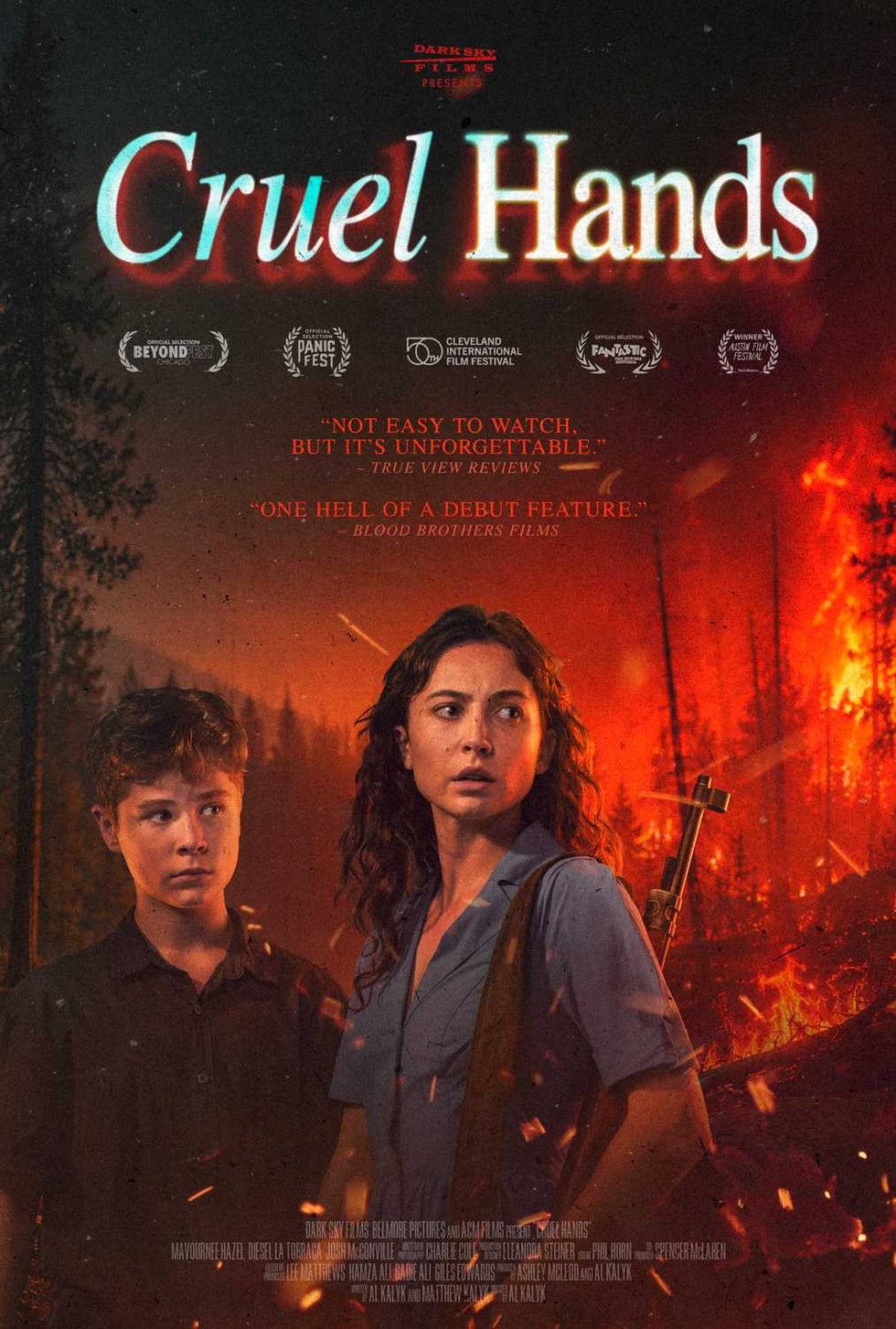 'Cruel Hands' Credit: ProjectionPR
NFS: How would you describe your visual style, and how do you adapt it across films like Cruel Hands and Corpus?
My visual style lies in intimacy and intrigue. I love a curious camera. My background is in fine arts; I went to school for drawing. And a lesson that always stuck with me was when a professor reminded us all - everyone here knows how to draw - what makes your drawing special. I try to keep that lesson alive with cinematography. Another drawing professor (that school clearly had a big impact on me ;) - thank you, Pratt Institute!) said that when you bring a piece up to show to the class, you should feel nervous. You should feel vulnerable. As a cinematographer, we are so protected by the camera; we risk nothing. The actors and directors are analyzed/criticized. I try to use that safe privilege to try and show as much of what I’m feeling as possible. And hopefully it comes across in the images.