You Can Sell Kaiju Scale Without a Blockbuster Budget
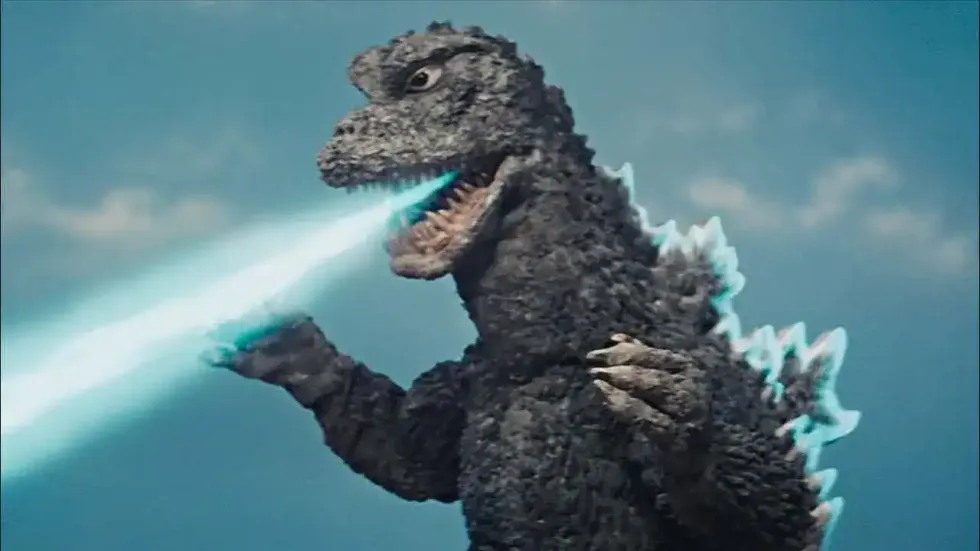
Godzilla Minus Zero hits theaters next month, and I don't know about you, but I'm super excited. Its predecessor, Godzilla Minus One , is now a famous, Oscar-winning, scrappy success story. Takashi Yamazaki served as the film's writer, director, and VFX supervisor. "Had there been a different writer, director, and VFX supervisor, each person would probably have a different image of what they see,"
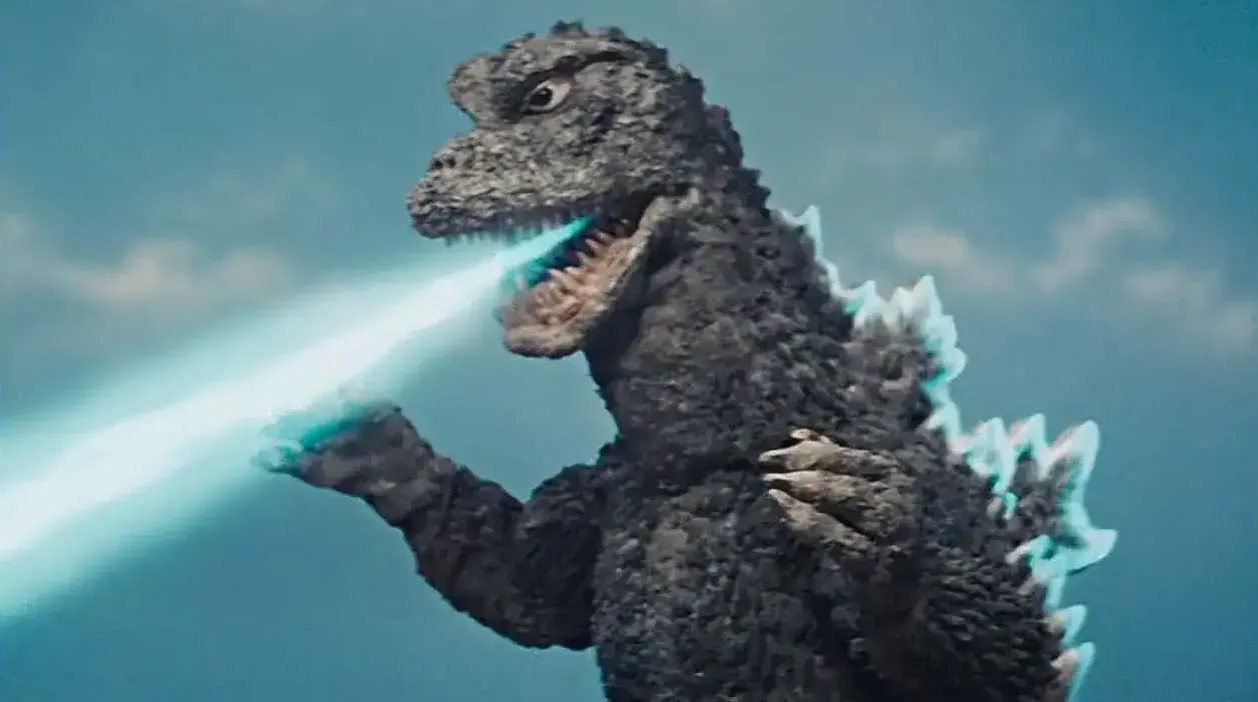
Godzilla Minus Zero hits theaters next month, and I don't know about you, but I'm super excited. Its predecessor, Godzilla Minus One, is now a famous, Oscar-winning, scrappy success story. Takashi Yamazaki served as the film's writer, director, and VFX supervisor.
"Had there been a different writer, director, and VFX supervisor, each person would probably have a different image of what they see," Yamazaki told IndieWire. "This way there's no friction or difference of vision. Having three people bundled into one limits what can be done, but it also eliminates inefficiencies because the vision from the outset is clear, and we can reduce the amount of trial and error that we have to go through in post-production."
Yamazaki's team of 35 artists made 610 VFX shots for under $15 million. That's cheap for Hollywood.
But what can we do as indie filmmakers if we want to make something as big (size-wise) as Godzilla? For us, the more useful model is probably Monsters.
Gareth Edwards, who served as writer/director/DP/VFX artist on the film, told SciFiNow that the budget was in the low six figures. He did all the effects himself on a fast PC, mostly with Adobe tools, plus 3ds Max for the creatures.
When you can't buy scale, you can plan for it, borrow it, hide it, and schedule it. Here's what you can do on a budget.
- YouTube www.youtube.com
Shoot the Plates Before Your Monster
Edwards built his effects shots into the shoot itself. He told Post Magazine that he'd sometimes pan away from actors in the middle of a great take.
"I was adding a lot of CGI to scenes. So if the actors are doing something brilliant, I'd pan off them to the sky to nothing, and the producers would get really confused watching the rushes—' This is brilliant, and you are panning away to nothing?!' I'd say, 'I am going to add a helicopter. I have to do it when it's brilliant, or it won't be in the film.'"
Back home, he and his editor tagged each effects shot in Premiere with a text label like "Tank," "Helicopter," or "Ruins."
On set, this will feel weird if you're shooting plates. Frame for the creature on the day. Leave space, move the camera as if something's there, and log every VFX shot as you cut.
Let Real Places Carry the Scale
On Monsters, the locations did a lot of the work for him, and he remained flexible on the day.
He told SciFiNow:
I mean, at one point we did joke about having the art direction credit as "God." It did feel like He did all the hard work, we just turned up and shot it. That’s the thing though, my biggest inspiration is going on holiday and traveling—or one of the biggest at least. You’ll stand in some amazing place in the world, and as well as there being something in front of you that’s stunning, there’ll be some random details, like dogs just fighting each other in the corner, or some monkeys, or kids playing in the street, and they’re all things that if you wrote it down in the script, a producer would look at it and tot up the price, and get some trained dogs, and kids, and now you need a teacher that has to instruct the kid, it adds up to thousands.
And you’re thinking, "No no no no no, I don’t specifically want those things, that just happened to be there when I was inspired."
He showed up and worked in whatever was already there, rather than demanding the details he saw another day.
Yamazaki makes a related point, from the other end of the budget scale. He told A.frame:
What makes Godzilla Godzilla is the sheer scale of what it is. To show that scale, how big and terrifying Godzilla is, you rely a lot on its surrounding environments and how the environments react to whatever Godzilla is doing in that space.
Before all the digital technology and what we have access to today, when Godzilla was still filmed using a suit, a lot of the physical limitations of a rubber suit implied that it was only the size of a human. That limited what filmmakers could do with things like the level of detail regarding how Godzilla affects its surrounding water or the destruction of cities. If you get too close, much of the scale starts to fall apart, and you lose the sense of its grandness.
At an indie level, that means the reaction is the part you can shoot practically. Things like the destructive aftermath, or in the moment, the actors' eyelines, debris, wind, flickering lights, or sparks, which can be simpler effects. Those are the inexpensive bits that sell the expensive idea of a kaiju.
Use every trick you can think of. Yamazaki's team recorded Godzilla's roar by playing it through a rented baseball stadium's speakers and capturing the echo. You can play your creature sound back in the biggest space you can get into. Scale comes from these kinds of choices.
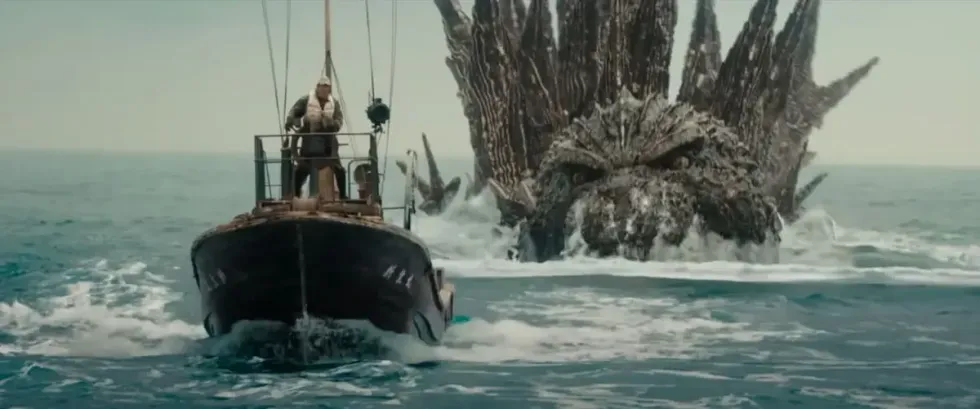 'Godzilla Minus One' Credit: Toho Co.
You Can Keep It Smaller and/or Darker
In Godzilla Minus One, Godzilla first appears in a smaller form before being changed by nuclear fallout. But that didn't make him less scary.
"We wanted the audience to feel this fear of an unknown being emerging from the darkness," Yamazaki told A.frame. "We played a lot with the brightness of the overall scenes, the direction of how we're going to show Godzilla and the performance of Godzilla itself."
He added that the smaller Godzilla fits in the frame with humans, which "increases the sense of reality" but doesn't make it less scary. Hiding him in darkness allows the viewer to imagine how scary the monster is.
Edwards also hid his creatures. SYFY noted that he kept them in darkness or showed them through TV news footage, which covered rough spots in the CG.
His shallow depth of field helped too. He told Post Magazine that his adapter and still lenses blurred the backgrounds so passersby were suggested but unrecognizable, which also saved him from chasing down release forms.
M. Night Shyamalan obscured the aliens in Signs until the very end. Bruce the shark stays underwater in Jaws until the latter half. Before the T-rex emerges in Jurassic Park, we see a disappeared goat and trembling water cups. These might seem like cheap tricks, but they can result in real terror.
Give Every Shot a Deadline
Especially at the indie level, you're going to be your own boss. Edwards told Post Magazine he worked alone through about 250 VFX shots, using a spreadsheet to set a time budget per shot.
"Then I ask myself what approach can achieve it in that time? And it's usually not the approach I'd default to. It's usually the crazier, quicker, dirtier approach."
He estimated that about 70% of those quick fixes held up in the final film. His view was that getting a shot right for most viewers might take a day, while satisfying industry pros might take a month. Choose your battles and stay on schedule.